Monday, March 06, 2006

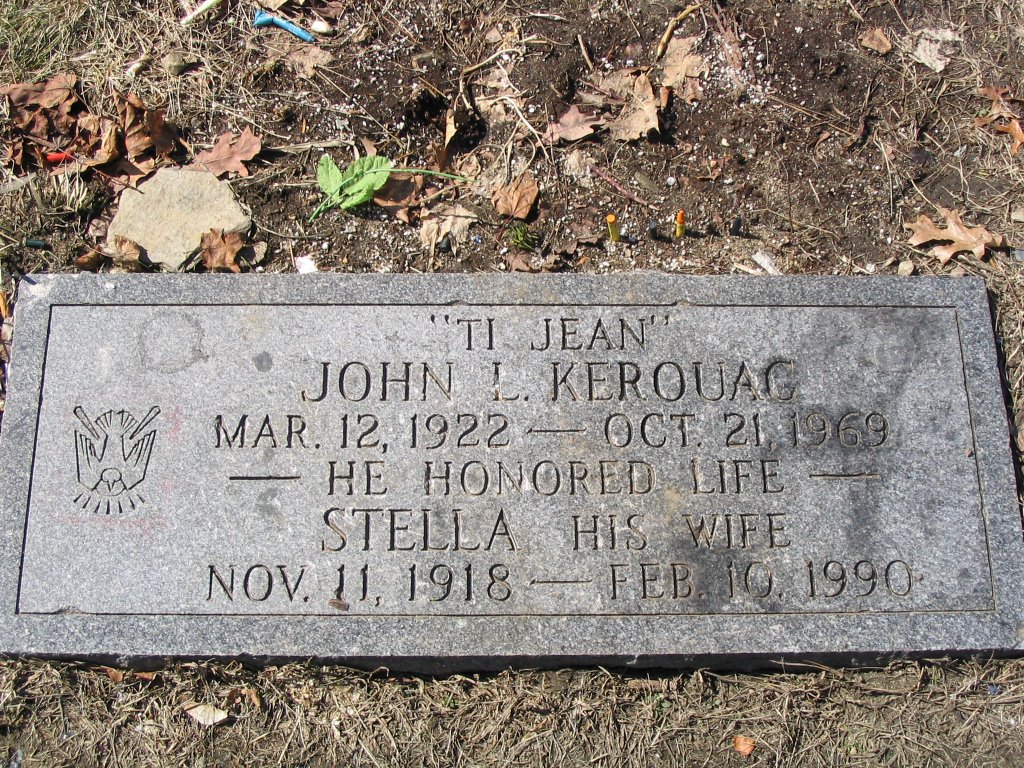
Kerouac's grave in Lowell
Ti Jean's birthday is less than one week away
Started reading Jonathan Safran Foer's Extremely Loud and Incredibly Close and fear that my disdain for his first novel has carried over. His first novel was like a comedy skit that went on too long. And though I'm only 40 pages in to Extremely Loud, it seems like he was continued to beat the dead horse. I can see why people may think he's creative and that his storytelling is unique, but I think it's tedious. He takes the easy way out.

Friday, March 03, 2006

Yesterday, one of my friends, a fellow blogger, asked me if I was ever going to post something on a topic other than books. Since I'm trying to keep this a book blog, I told her no. Though I often get the urge to write postings about politics, sports, work and other generalities of my life, I have refused to do so. Until now it seems. But I'll let it end here. I know a lot of bloggers out there, and I'm still a neophyte, who want to become the next Julie Powell (author of Julie and Julia : 365 Days, 524 Recipes, 1 Tiny Apartment ) and have their blogs discovered and be asked to write a book. But this is a dream akin to one I had growing up and wanting to be a space cowboy. It isn't going to happen. And we know this. Still, we stay up late writing our blogs that only our friends read when they're bored at work. We still wake up early to send out an e-mail letting our family know we posted again. While cooking dinner we try to remember that quote from some book so we can post it and sound witty. Pseudo-intellectual am I. And for no other reason than biblio-vanity, I will post again. And again. For that I'm not sorry

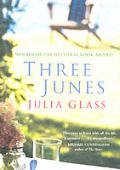
On the recommendation of a friend, I read Julia Glass's novel, Three Junes. It's a departure from what I normally read, but it was an enjoyable and quick read. It's told in three parts, by three different narrators.

The first section of the book, which was originally published as a novella, was narrated by newly widowed Paul McLeod. A newspaper publisher from Scotland, Paul is traveling through Greece on a tour. Along the way he forms a strange bond with an energetic woman who acts like a den mother and he finds himself attracted to a much younger American art student, Fern. However, Fern's attentions are drawn to the travel guide, John. The most memorable part of Paul's passage, was when one of the woman mentioned that he wasn't buying any souvenirs or taking any pictures. Paul said he took the trip to lose memories, let them go, not make new ones.

Paul's oldest son Fenno narrates the second section of the novel. Fenno, who is gay, guides us through the deaths of his mother and more recently his father. A bookstore owner and caretaker for a friend dying of AIDS, Fenno journeys back and forth from Scotland to New York; from artist lover to deathly ill friend; from pedigree dogs to parrots. Glass's description of the epidemic of AIDS was well constructed, showing the reader the demise of a once active man's body. Fenno's friend, Malachy "Mal" Burns, may be Glass's strongest character. His dry wit and biting observations, make the dying music critic a strong focal point to Fenno's sometimes undefined life. Mal's seeming courage in the face of death has just enough sentimentality to sustain the emotion.

In the third sections, Glass returns to Fern to lead us home. Fern is now in her mid thirties, also a widow and now pregnant with her new boyfriend's baby. The entire episode takes place in a summer house, in which her friend Tony is house sitting. Drawing the story together, Tony is Fenno's former lover and house sitting for Fenno's friend and business partner. When Fenno shows up at the house unexpectedly, he and Fern are drawn to each other, building and an immediate relationship. Fern even says that if it were ten years ago, she would have fallen in love with him. But perhaps she still has. Perhaps this is the friendship we all look for, but seldom find.

Glass manages to intertwine the lives of numerous, mostly fully realized characters. And though the story itself centers on predictable themes of love, death, birth and hope, Glass is able to make them her own. And because of that, we are grateful readers.

Now reading:
David Liss A Conspiracy of Paper

Listening to:
Travis Invisible Circus

Thursday, March 02, 2006

My new favorite book blogs are... Bookdwarf, Tingle Alley, Fresh Eyes and Pages Turned. Please check these out, they will be worth your while.

Bookdwarf is a bookseller in Cambridge who has all the info you'll need on Boston based book events, such as author readings. She's also posts her 'current reads' frequently. And unlike me, she's reading books that are either on the cusp of being published or on the verge of becoming noticed. In other words, she's on the frontline of books.

Tingle Alley is a wickedly smart reader in North Carolina. As far as book blogs go, hers is in depth.

Fresh Eyes is a now retired master bookseller from Vermont. His experience selling books, reading books and talking about books, make his blogs one of the best. He's also a great writer. Reading his blog makes me want to be a bookseller.

And Pages Turned is a blog I just started reading and now I'm reading the archives. A great blog to read while I act busy at work.

I just wish all these writers posted every day. Every hour of every day.

Oh yeah, and check out my friend (non-book blog) Blogalicious

Wednesday, March 01, 2006

The Associated Press has reported that the New York Public Library has bought the official collection of the William S. Burroughs archive. Now, Burroughs's letters, correspondence and notes will be within the same walls as Kerouac's. However, Ginsberg's archive is 3,000 miles across the country at Stanford.

Thursday, February 23, 2006


Jose Saramago is, if anything, an innovative story teller. Page after page, his novels unfold in surrealist scenes and schemes. His characters do things that many of us wish we did, wish we could do. In The History of the Siege of Lisbon, a gifted proofreader decides to place a Not in a history book, where a Yes was supposed to go. In the 12th Century the Portuguese king asked the Catholic Crusaders to help Portugal fight the Moors in an effort to regain Portugal. The Crusaders said Yes. Raimundo changed this Yes to Not. In essence, the proofreader was rewriting history. Something I have wished I could do. While Raimundo Silva waits for the editors to find the mistake, if they find the mistake, he's anxious, but not nervous; he's cautious, but not ashamed. He goes to the office more than usual, as like he says, a criminal revisiting the scene of the crime (I'm paraphrasing.) But it's not the scene of the crime, because Raimundo works from home, like writers do. He stays up late pouring over manuscripts, like writers do. And that's how the book turns. Raimundo's intentional infraction is found, but he isn't fired. The publisher values his proofreading skills too much. However, they have hired a head proofreader who will have final say on manuscripts. It's a woman and she changes Raimundo's life. She gives him the only copy of the history text that wasn't revised. Or more accurately the only copy that didn't have a "erratum." So, in fact, he has rewritten history, even if he, the author and the editors, especially Dr. Maria Sara are the only ones that know. Dr. Maria Sara then asks Raimundo to actually write his own book on the Siege of Lisbon as if the Crusaders actually didn't help the Portuguese. After saying no to her initial suggestion, Raimundo has reconsidered and has begun his book. He has yet to tell Dr. Maria Sara.

Reading Saramago is an experience for the narrative in itself. No quotation marks. No traditional paragraphs. No traditional conversations/dialogue. It's amazing that your mind is able to catch on so quickly the this change in form.

Tuesday, February 21, 2006


Have I ever told you how much I love reading E.B. White? There's great humanity in his writing. Through his writing, he has become the grandfather I wished I had. He is the type of man of letters that I dare to become. He writes adoringly and critically of the overwhelming city where anything is possible. He writes of the country and his animals, our animals, us. This man who wrote Charlotte's Web, who for years I thought was only a children's author, was a poet, an editor, a grammarian, a farmer, a husband, a father, a letter writer and part of the most significant literary partnership with his wife and noted editor of the New Yorker, Katherine. E.B. White, Andy as he was known to his friends is widely overlooked in academics and to a large degree in general literary discussions. Let this not be the case any longer.

Books I've purchased:
David Liss A Conspiracy of PaperBalzac A Harlot High and Low
The complete novels of Dashiell Hammett
E.B. White The Second Tree from the Corner
Jose Saramago The History of the Siege of Lisbon
(all bought used for a total of $7.72)

Books I've read:
E.B. White The Second Tree from the Corner

What I'm reading:
Saramago The History of the Siege of Lison
Ocshner People I've Wanted to Be

On deck:
Liss A Conspiracy of Paper
Julia Glass Three Junes

What I'm listening to:
Art Tatum On the Sunny Side of the Street

Friday, February 17, 2006


I literally couldn't put Sarah Hall's second novel, The Electric Michelangelo down. It's cliche, I know, but it's true. In two quick days, I read fascinating novel of Cyril (Cy) Parks, a gifted tattoo artist from Northern England that learns his art from one of England's most enigmatic characters, Eliot Riley. Cy, begins his apprenticeship with Riley during the inter-war period of the 1920s. Riley, a drunk, but brilliant tattoo artist, teaches the fairly naive Cy, about art, tattoos, life and love. Well, actually not so much love as much as sex. When Riley dies, Cy packs up and moves to New York and is taken in by former carnival workers and ushered into the world of Coney Island where anything goes. It's here that Cy meets a mysterious woman who keeps a horse in her small apartment and has Cy cover her body in a single tattoo, over and over again. But more than the larger than life characters, it's Hall's language that moves the story on, making the reader never want it to stop, like a ride on a Coney Island merry-go-round.

"The tide was a long way out, further than he could see, so far as
anyone knew it was just gone for good and had left the town permanently
inland. It took a lot of trust to believe the water would ever come
back each day, all that distance, it seemed like an awful amount of
labour for no good reason."


The only thing I can compare this novel to is Moby Dick. Maybe it is a modern take on Moby Dick. Both novels focus on characters that explore themselves and observe the underbelly of human nature. And by no small feat, Hall is able to create an astounding work of fiction that may one day be able to be seriously considered an equal to Moby Dick.

Currently reading:
Gina Ochsner People I Wanted To Be

On deck:
TBA

Listening to:
Clifford Brown and Max Roach

Tuesday, February 14, 2006


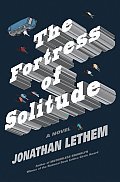
I'll give Lethem credit for attempting to play with narrative form in The Fortress of Solitude. However, with such a large novel concerning the same protagonist, Dylan Ebdus, his switch from third person narrator to first person was abrupt. The tone of the novel changed considering the different way the narrator viewed the story. However, the language of the novel also changed, but not significantly. And maybe that's my problem with the narrative arc. Why didn't Dylan tell the story the entire time? Did Lethem think Dylan was too young to carry the story from his viewpoint? Did Lethem write two books at once? One about the younger Dylan and one about the older Dylan? One of the reasons I love literature is that it's the reader's interpretation. No one else's. I know other readers will have a different take on the split novel. I enjoyed it. I highly recommend it. Lethem hasn't disappointed me yet. Though he's older than me, I feel some kinship to him, to his characters and too his New York. That's what makes him a gifted writer. That's why I'll read his next novel. And his next. And his next. Literature is supposed to make us think. It's supposed to sound like the beats of life. It's supposed to move us. At least that's what it does for me and none seem to do it as well as Jonathan Lethem.

Just finished:
Kazuo Ishiguro Never Let Me Go

Now reading:
Sarah Hall Electric Michelangelo

On deck:
Gina Ochsner People I Wanted To Be
Books to buy:
Elizabeth Crane's "When the Messenger is Hot"

Thursday, February 09, 2006

I haven't bought a new, full priced hardcover book in awhile, but I think I may make the move. The excerpts I've read of Sara Gran's noir novel Dope, were great. Yes, they seem to have been written by Raymond Chandler himself, but the language is all her own. I haven't read enough to make a realistic opinion, but I've read enough to know I want to read it immediately.

I'm almost finished with Lethem's Fortress of Solitude and will write more on it once I'm done. Though it's a great book, indicative of a time, a place and a culture, it doesn't have the same weight as Motherless Brooklyn. The prose reads the same way and the reader can still feel and smell the city streets Lethem describes, but the purpose of the book shifts. Through the first half I thought it was going one place and ended up going another. This may have been Lethem's purpose, I don't know. And at times the narrator doesn't let the reader in to certain aspects of the main character's life that I thought were significant. i.e. How he felt about his mother abandoning him, how he felt toward his artist father, etc.

But more on this in a few days when I've gathered my thoughts.

Now reading:
Jonathan Lethem Fortress of Solitude

On deck:
Kazuo Ishiguro Never Let Me Go
Gina Ochsner People I Wanted to Be

Tuesday, February 07, 2006


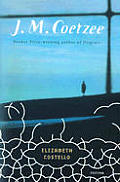
Late last year I read the novel Disgrace by J.M. Coetzee." It was one of the most visceral reading experiences I've had. My body ached as I read it. The prose was perfectly sparse. In fact, it was gorgeously written. I had wanted to read the book for years, but never did. Now I just finished Elizabeth Costello. For two days I was mesmerized by his ability to play with narrative forms. In the first chapter, titled Realism, he, the narrator, skips to parts of the story that only carry the novel forward. Of course that's what a good narrator does, but Coetzee has the narrator actually tell the reader, "I'm skipping ahead because nothing really happens here." I paraphrase, but it was surreal. The book itself follows the title charcter, Elizabeth Costello, as she accepts an award in Atlanta, gives speeches aboard cruises and takes part in a series of lectures. There are definitely writers, women especially, but possibly even men, that write in a woman's voice better than Coetzee. But no man that I've read has written such a strong female character. Forceful, unforgiving, brilliant, sexual. To me, she was everything women like Isabel Archer are not. Elizabeth Costello was everything I look for in full-bodied literary figures. She won't leave the reader's head for awhile if ever.


p.s.
Coetzee reportedly once went to a party and didn't say a singe word all night. I'm glad he saves his best words for his novels.

Now reading:
Jonathan Lethem's Fortress of Solitude
Shelby Foote's Civil War

On deck:
Kazuo Ishiguro's Never Let Me Go
Gina Ochsner's People I Wanted to Be

Listening to:
Rilo Kiley's We'll Never Sleep (God Knows We'll Try)

Thursday, February 02, 2006


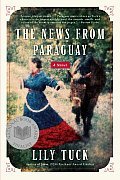
Sometimes I pick up a book or start reading a book solely because it has won an award. I know that the saturation of awards has made most awards worthless, but I still find myself looking to them. Once again I've been let down. Lily Tuck's The News From Paraguay won the National Book Award, but shouldn't have. It's a choppy book, full of jutting paragraphs, short chapters, underdeveloped characters and a so-called protagonist that Tuck failed to give structure to. How this novel won the NBA is beyond me. My friend and I were recently talking about the poor writing of our peers in grad school. How the writing was embarrassing to read. Sort of like this blog. Well, Tuck's novel was like that. It was as if a grad student's manuscript somehow got through the editors at Perennial and was published by gross neglect.
When reading a book I have to 'like' the main character. I don't know how else to describe it. I don't want to sympathize, empathize, or love the character; just like. Tuck's Ella Lynch is such an underdeveloped character that it makes the novel seem like whole parts were edited out and the structure was never reshaped. Why would I care to keep reading about an Irish woman that falls for an arrogant man while living in Paris, becomes pregnant, moves to Paraguay with him, he becomes dictator, have more of his children, never marry him, allow him to keep lovers, cheers him on as he starts war with three countries and devastates his home country? Maybe it's just me.

Now reading:
J.M. Coetzee's Elizabeth Costello
volume I of Shelby Foote's Civil War

Listening to:
Feist

p.s.
Oh yeah, I should mention, my sister graduated college last Friday!! She's "growns up, is growns up"

Tuesday, January 24, 2006

I used to read only one book at a time. Not anymore. I usually have one book that I try to read at all times, presently Shelby Foote's Civil War, but I always have others around the house, within reach. Tobias Wolff's Old School, A.B. Guthrie, Jr.'s The Big Sky and Lily Tuck's The News From Paraguay on my desk, next to my laptop, where the shadow from my desk lamp covers a quarter of the books, while casting a larger shadow over the Marc Chagall postcard that I'm no longer using as a bookmark.
On my bedside table, I have Philip Roth's The Plot Against America dominating my tiny black alarm clock, but fighting for space with the steel reading lamp. On the bottom shelf the night stand is Thoreau's Walden and Henry James's The Portrait of a Lady, which I've discarded for the time being. On the opposite side of my bed, on my unfinished wood crate filled with my vinyl, are the other two volumes of Foote's Civil War and Jonathan Safran Foer's Extremely Loud and Incredibly Close, which I'm hesitant to read because I disliked Everything is Illuminated so much. (Even though I wanted to like it so much. But I loved his wife, Nicole Krauss's, novel The History of Love. Possibly one of the best books I read last year.)
I've never read anything by Roth before, so I'll probably start Plot soon enough, but I don't really know which book I'm going to begin next. I just like to keep my options open.

Thursday, January 19, 2006


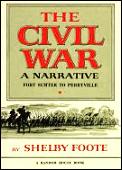
Shelby Foote's narrative history of the Civil War is brilliant...thus far. I'm only 250 pages in to the three volume, 3,000 page saga, but it reads like an epic novel. Asked to write a book on the Civil War, the Southern born writer began, but couldn't stop. Over 3,000 pages and decades later, Foote's three volume narrative stands as a testament of American literature and history. Foote's account is unique in it's ability to transcend traditional history writing standards. Like his contemporary David McCullough, these two men are writers who chose American history as their subjects. Though Foote wrote numerous novels that met with some success, it was his Civil War that made him a respected literary figure and historian.
But it wasn't until Foote was featured in Ken Burns's Civil War documentary, in which Foote was the main commentator, that he became a star. His smooth Southern accent, wit and storytelling made him a sensation. The white-bearded Foote's novel found a new audience. And it's the first time I heard of him. I was as much amazed with the engaging Foote as I was with the documentary as a whole. But it wasn't until this week that I started the first volume. If anyone has any qualms about reading books on history, should pick up this volume...or at least the first book. There are no footnotes, no endnotes, just a story that is all too real. We know many of the names, but through Foote, we begin to know the real men. I know it's a cliche, but it's true. Grant, Sherman, McClellan, Davis, Lincoln, Stonewall Jackson...I've only just begun the epic and may not finish all three volumes anytime soon, but I know I'm already a better person for reading this book. Shelby Foote, a great American author and an even greater man.

In memory of Shelby Dade Foote November 17, 1916 - June 27, 2005

Friday, December 09, 2005


A couple weeks ago I started Henry James's The Portrait of a Lady, being that it's one of the books that I always wanted to read, knew I should read, but hadn't read. It's a big book. I like in-depth books. I'm not adverse to picking up a 1000 page book. If it's well written, the reader becomes lost in the characters' lives, like in Proust's Remembrance of Things Past. I have never gained so much pleasure as when I read Proust. I haven't read his entire masterpiece, but I've read four volumes so far. However, Portrait is a different book. It's roughly 850 pages long and divided into two books. I'm halfway through the novel and I don't care for a single character. Not the lady, Isabel Archer, not her cousin Ralph Touchett, not his mother, not Isabel's friend Harriet Stackpole, not Isabel's suitor Mr. Osmond (who I presume she marries,) and certainly not Madame Merle and her passive aggessive sinister ways. Four hundred pages in to the dense novel and the only characters that I've even made a semblance of a connection with are the now dead Mr. Touchett, Ralph's benign father and Lord Warburton who professed his love for Isabel.
James has created vague characters, most who lack any redeeming qualities. Though Isabel may seem to be making her life her own, James somehow portrays her as a child unaware of her beguiling powers. When she is left a large sum of money by her uncle, Mr. Touchett, upon his death, she is to supposed to have the world at her feet, according to James. She can now travel and live as she likes, without a care in the world. True, money can buy such luxouries, but why did James have to make his lead character possess a large sum of money in order to live whatever life she chooses? Maybe I'm placing a modern ideal on a late-Victorian novel, but I don't buy it. Or perhaps James accomplished precisely what he wanted? He painted a portrait of the ideal woman. A woman who is not real. Who has no true emotions, ideas or cares. A woman who does not possess self-knowledge or know her self-worth. He created a 2-D character, not a real woman. She is unlike any woman I've met. And that's not a good thing.


Also reading: The Peabody Sisters by Margaret Mitchell
Off the Road: My Years with Cassady, Kerouac and Ginsberg by Carolyn Cassady

On deck: V by Thomas Pynchon
Old School by Tobias Wolff
The Big Sky by A.B. Guthrie, Jr.