I didn't mean to lie, it just sort of happened. I have every intention of blogging, but I never seem to get around to it like I want. I have a list of excuses: I'm in the process of moving, work is getting busy, I was in between books, I'm lazy. All true, but not very good excuses. I'm moving this weekend and probably won't be able to read and or write, but I will once again take fingers to keys and post next week about the few books I've read recently.
I'm now on to Isabelle Allende's Zorro and Arturo Perez-Reverte's The Club Dumas. The Perez-Reverte novel is reminiscent of Shadow of the Wind but it's still an entertaining read. And am I the only person who didn't know the movie The Ninth Gate was based on this novel?
Friday, March 30, 2007


Friday, March 23, 2007
Stealing from Bookgirl, here's my 10 Books You (I) Can't Live Without:
Moby Dick Herman Meliville I think it's the greatest American novel.
On the Road Jack Kerouac The most influential book and author of my life.
The Idiot Dostoevsky Prince Myshkin is one of my favorite literary characters.
Look Homeward, Angel Thomas Wolfe It was difficult to choose between Look Homeward and You Can't Go Home Again, so I chose the one I read first.
The Great Gatsby F. Scott Fitzgerald It seems cliche or passe, but it's still one of the most complex novels I've read.
A Death in the Family James Agee Simply one of the most starkly lyrical novels. Masterpiece.
Swann's Way Marcel Proust Grand.
As I Lay Dying William Faulkner My Faulkner list alone, could have gone on for ever. This is my favorite Faulkner, probably because it still haunts me.
The Long-Winded Lady: Notes from The New Yorker Maeve Brennan From one of the 20th Century's most neglected writers. At least in my opinion.
Good Morning, Midnight Jean Rhys This book opened my eyes to the wide world of literature (outside the Beat writers.)
Thursday, March 22, 2007
No, I haven't been off losing myself in March Madness like in years past, I've been reading. Luckily I came across a few great books in a row.
During the past week or so, I read The Mercury Visions of Louis Daguerre, The Haunted Bookshop (albeit a better copy than the one pictured on Powell's. Mine is a little hardcover with dust jacket from the 1950s.) and in less than 24 hours, I finished Written on the Body.
I'm going for a few drinks afterwork, but I'm looking forward to writing up some thoughts on these books. All perfect in their own way. I know I've written it before, but I'll write it and say it again, go out today and pick up a Jeanette Winterson book. You won't be disappointed.
Hopefully waiting for me when I get home tonight:
Club Dumas, Angle of Repose and The Way of all Flesh.
I never thought I'd say such a thing, but Thank You Amazon.com. It sounds like such blasphemy even as I write it.
Friday, March 16, 2007
It only took a couple days to finish Dope. Amid the multifarious weather of New England's final days of winter, Dope was with me for a little while and I probably won't remember much of it a couple weeks from now. Nothing impressive. I kept waiting...for something...but it never came. It's short. At least it has that going for it.
Now reading:
Dominic Smith The Mercury Visions of Louis Daguerre
Sheila Heti Ticknor
On deck:
Arturo Perez-Reverte Club Dumas
Wallace Stegner Angel of Repose
Now reading:
Dominic Smith The Mercury Visions of Louis Daguerre
Sheila Heti Ticknor
On deck:
Arturo Perez-Reverte Club Dumas
Wallace Stegner Angel of Repose
Monday, March 12, 2007
Whenever I read Raymond Chandler or Dashiell Hammett, I tend to feel that I could write like them. I just began Sara Gran's Dope and her writing is so sparse and simple, that it seems like anyone could write like her. Not the case. It's a perfectly rendered noir novel. 19 pages in, 224 pages left. I'm ready to go.
The bright sun outside was a shock after Maude's. It was one o'clock in the afternoon on May 14, 1950, in New York City. On Broadway I hailed a taxi to take me down to Fulton Street, and then I walked a few blocks until I found number 28. It was a quiet place, a tall narrow building that looked like someone had poured it in between two buildings on either side. The whole front of it was white stone carved up with clouds and faces and stars, and it came to a point at the top like a church. A doorman in a sharp blue uniform with gold braid opened the door for me with a big smile. Inside there were marble floors with clean red rugs and streams of people coming in and out, busy people in suits with briefcases and very important places to go. In the middle of the lobby was a big marble counter where a good-looking fellow in the same uniform sat guiding everyone on their busy way. But I already knew where I was going.
The bright sun outside was a shock after Maude's. It was one o'clock in the afternoon on May 14, 1950, in New York City. On Broadway I hailed a taxi to take me down to Fulton Street, and then I walked a few blocks until I found number 28. It was a quiet place, a tall narrow building that looked like someone had poured it in between two buildings on either side. The whole front of it was white stone carved up with clouds and faces and stars, and it came to a point at the top like a church. A doorman in a sharp blue uniform with gold braid opened the door for me with a big smile. Inside there were marble floors with clean red rugs and streams of people coming in and out, busy people in suits with briefcases and very important places to go. In the middle of the lobby was a big marble counter where a good-looking fellow in the same uniform sat guiding everyone on their busy way. But I already knew where I was going.
Wednesday, March 07, 2007
Since September of last year, I've been lazy. A lazy reader that is. I haven't read too many books over the six months. Maybe 12 or so. I finished 2006 having finished close to 65 or 70 books. The most I had read in one calendar year. This year I don't envision reading 70, but I'm hoping to pick up the pace and get back into the swing of things.
Since January, I've read only about six so far, mostly hitorical non-fiction. I've been able to get my non-fiction fix early and out of the way. I've also finished my first Louis Auchincloss, The Rector of Justin and my first Allegra Goodman, Intuition. Auchincloss was a pleasent surprise, but Goodman didn't live up to the hype. However, I think that my disinterest in science labratories could have played part in my reading.
Though there was nothing novel in Auchincloss's book about an all boy's school in New England, it was a good read. Quick. It hasn't made me want to read any more of his work, but I'm glad I spent a few days with his old school novel.
With Goodman, I had been waiting to read Intuition for awhile. It's set in my backyard of Cambridge and Boston and I'm always interested in books that take place around here. This book simply didn't live up to my expectations. A story about moral ambiguity and ethical methidcal practices, Intuition was flat. I was waiting for the language to take me into the story, but it wasn't there. I have Katerskill Falls on my shelf at work, but I think it'll have to sit there for a little while longer.
Tuesday, March 06, 2007
This is my first post in nearly six months. I feel that I'm being pulled back into the Blog world. I tried staying away for long enough. "Just when I thought I was out they pull me back in."
I shall try and get back to write a little more later tonight and provide a quick catch up on what's been going on with my reading habits (which I fear have slackend since last post.)
Currently reading:
Cynthia Ozick The Puttermesser Papers
Just finished:
Allegra Goodman Intuition
On deck:
Sara Gran Dope
Dominic Smith The Mercury Visions of Louis Daguerre
Sheila Heti Ticknor
Wednesday, September 20, 2006
This is my last post here at Liquid Thoughts. I started blogging because I thought it would be a fun way to connect with like minded people, or even better, connect with a diverse group of bloggers and readers. However, it's becoming a chore to blog and I'm going to go back to my journaling ways and leave the blogworld.
I'll still be reading blogs and hope you all continue to publish such great essays.
Cheers
Mike
I'll still be reading blogs and hope you all continue to publish such great essays.
Cheers
Mike
Wednesday, September 13, 2006
I just found this site at LitKicks. It would be cooler if the shirts didn't have the names on them, but I may have to get a couple.
In college, we knew all the cliques. Cliques seem to be stereotypes that transcend time and location. In Donna Tartt's The Secret History, a group of gifted and privileged students studying Greek and the classics commit murder. The novel challenges the reader to watch these students, Henry, Francis, Richard, Bunny, Camilla and Charles deal with the emotional turmoil that comes with covering up a murder. It never goes smoothly, does it? The students think they're smarter than everybody else, tricking cops, the FBI, classmates, parents, teachers and the Vermont community. Unfortunately, Tartt actually does make them smarter than everybody and that is one of the downsides of the novel because Spoiler Alert they get away with, not one, but two murders. I don't know what Tartt's trying to say with this. Later in the book, we learn that a few of the kids crack and never really get their lives in order, but I wanted more trouble for the murderers. I wanted them to pay for their crimes, not just emotionally. I'm a square through and through, but I understand that life is not always black or white. I watch film noir and read Raymond Chandler. I know that people do some awful things because they feel there's no alternative. But Tartt doesn't want us to sympathize with these characters. And that's good because I didn't want to. These were cold blooded killers that were supposedly above reproach. The protagonist/narrator Richard, actually ends up going for his Ph.D in literature and is the least scarred of all the killers. I like shady protagonists...people on the skirts of society, living in the shadows of right and wrong. Richard isn't that guy. He's more of guiltless Ripley-esque character, without Ripley's charm.
It may not seem it, but I enjoyed the novel. It was an easy and entertaining read. I just never got what Tartt was trying to say, if anything. I didn't underline or mark any passages (and that's sad,) I simply read it and was done with it. I think Tartt's friend and former classmate, Brett Easton Ellis can still claim to rule the world of collegiate narcissism and moral corruption.
It may not seem it, but I enjoyed the novel. It was an easy and entertaining read. I just never got what Tartt was trying to say, if anything. I didn't underline or mark any passages (and that's sad,) I simply read it and was done with it. I think Tartt's friend and former classmate, Brett Easton Ellis can still claim to rule the world of collegiate narcissism and moral corruption.
Tuesday, September 12, 2006
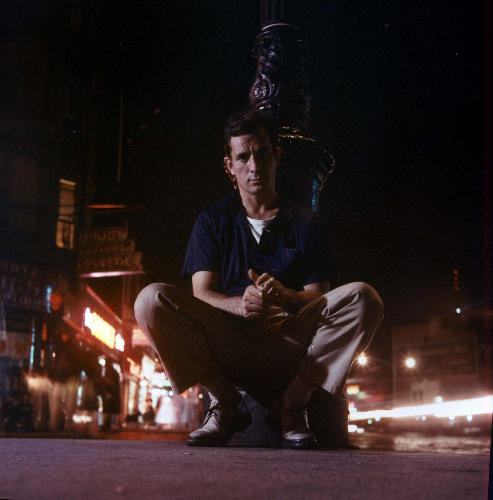
I enjoyed The Secret History and hopefully I'll post about it today or tonight. Eventhough it was about 650 pages, I read it in about four days. Now I'm breezing through Paul Auster's The Brooklyn Follies. I started it last night, but I should finish it during lunch today. It's great!
And maybe I'll get up here this fall and walk in Edna St. Vincent Millay's footsteps.
Now reading:
Paul Auster The Brooklyn Follies
Up next:
Marcel Proust Sodom and Gomorrah
Just finished:
Donna Tartt The Secret History
And maybe I'll get up here this fall and walk in Edna St. Vincent Millay's footsteps.
Now reading:
Paul Auster The Brooklyn Follies
Up next:
Marcel Proust Sodom and Gomorrah
Just finished:
Donna Tartt The Secret History
Wednesday, September 06, 2006
Enough! So long Jonathan Strange & Mr. Norrell. We hardly knew ye. Three hundred pages and another wasted lunch hour were about all I could take of Jonathan Strange.
I never got into Harry Potter and I can't deal with the adult version either. I enjoy a magic show, but I appreciate it for what it is. Magic, illusion, slight of hand, mind games. In Jonathan Strange, the people believe in magic for real and want to use it for practical purposes...war! I couldn't grasp it. I've already given it to a co-worker and have decided to read Donna Tart's The Secret History. A friend has recommended it and let me borrow it and so...I begin.
I never got into Harry Potter and I can't deal with the adult version either. I enjoy a magic show, but I appreciate it for what it is. Magic, illusion, slight of hand, mind games. In Jonathan Strange, the people believe in magic for real and want to use it for practical purposes...war! I couldn't grasp it. I've already given it to a co-worker and have decided to read Donna Tart's The Secret History. A friend has recommended it and let me borrow it and so...I begin.
125 pages Monday. 110 page Tuesday. And it's 8:17 a.m. and I've already read another 20 pages of Susanna Clarke's Jonathan Strange & Mr. Norrell. In most cases, reading this many pages so quickly would be a good sign. It would seem to mean that I was enjoying the book and that I was nearing some sort of end. However, it's neither. The book is such an easy read, that you just sort of flow along, not really becoming entranced by the magic, magicians or anything much for that matter. I've been reading it with a certain nonchalance that I'm not accustomed to. But it's the book that demands this. How else are we to make it through 1,006 pages? This book is a behemoth. I'm 255 pages in and I'm not even out of the first section. The second main character, Jonathan Strange, has just been introduced into the fold.
This book has received nothing but rave reviews, winning countless book of the year awards. Now, I really don't care about awards or reviews for that matter, but I do pay attention to them. Hopefully, I'll be able to make my own judgment. I'm not saying Clarke's book is bad or poorly written. I was just hoping to be sucked into the world of mystery and magic, with mist and eerie British settings, conducive to prolonged periods of reading as rain falls, quieting the world around me. Instead, I've been lulled into a world of practical magic, where Mr. Norrell wants to use his powers to aid in the war against Napoleon and the French. I don't want people being turned into pumpkins, but magicians fighting wars? I get it. I take it as a modern version of Merlin. Or something like that.
Maybe the next 250 pages will be the catalyst to invigorate me, to invigorate the book. I would think that after 500 pages a book would speak to me. May Jonathan Strange whisper for me to put him down? We shall see...
p.s. I am not reading this book as part of Carl V.'s Readers Imbibing Peril (R.I.P.)Autumn Challenge, but I may take up this challenge if I can get through Jonathan Strange.
Tuesday, September 05, 2006
I admit that I had never heard of Rebecca West until sfp at Pages Turned wrote about her. What many already know is that West was a brilliant writer. I quickly realized this after reading only a few pages of her books. Then I read that she had an affair with H.G. Wells at the age of 19 and they had a son together. However, Wells was still married. His wife reportedly knew of the affair, but chose to ignore it. At this time, I was reading Wells's The Island of Dr. Moreau and by coincidence, A.S. Byatt's Possession. The turning point came when I began to see similarities between Byatt's Victorian romance and the real life Wells-West relationship.
In Possession, Randolph Henry Ash, a famous poet and writer in Victorian England begins a secret affair with Cristobel LaMotte, also a gifted writer, but supposed lesbian. At the time, Ash and LaMotte were writing epic poems and stories based on old British and Breton myths. It was a world of fantasy, shadows and metaphors, similar to modern science fiction that Wells was writing of. Now, I have no idea if any of this makes sense, but I enjoy finding these little nuances in novels and trying to discover if they have any relation to anything real.
Ash and LaMotte have this affair which produces a child, just as Wells's and West's did. Though LaMotte has the child in secret and gives it up for her sister to raise, there was a child. Also, LaMotte's lover Blanche tells Ash's wife that Cristobel and her husband are having an affair. Ash's wife chooses to ignore this news and continues to live her life with Ash as if nothing happened. This was similar to Wells's wife's knowledge of his fairly public affair with West and her choosing to remain with him.
And the last thing that struck me as interesting is that though West was well known and respected in her time, Wells is certainly the more famous writer of the duo. West is still read and studied, but nowhere near on par with Wells. In Possession, it is Ash that retains the fame and notoriety, while LaMotte becomes a subject for select scholars. Byatt may have simply been following the all too familiar path of women writers through history...neglect.
These are possibly only mere fancies I've created. Mere coincidences, not probabilities. But Byatt is a scholar of the Victorian and she would certainly have known about Wells and West, as many already do. Wouldn't it then be possible that she had this love affair in the back of her mind as she began writing Possession? I don't know and it probably doesn't matter in the end, but it added layers to the novel that I would have glanced over, were it not for the real life similarities.
Friday, September 01, 2006
I just finished A.S. Byatt's Possession and I'm going to write about it. But, I want to do a little research and find out more about the relationship between H.G. Wells and Rebecca West. The Victorian love story between Randolph Henry Ash and Cristobel LaMotte, in Possession seems to have far too many similarities to the Wells - West relationship than simple coincidence. I'm not taking notes or anything, just reading more about it all. It's actually more interesting than the novel itself.
Thursday, August 31, 2006
Cross-posted at Slaves of Golconda
I was talking to my father the other day about invention. From the beginning of history, people conducted their lives in similar ways. For thousands of years, news traveled the same way, wars were fought the same way, food was cooked the same way. Then in the mid-1800s, the world changed. People went to sleep one dreamfilled night in what could have been 1625 and awoke to a world that they didn't recognize. Trains, the telegraph and later indoor electricity. The Victorians were on the doorstep of the modern world. They were the first through the door. And the advent of modern science was the umbrella that covered their contemporary lives.
Yes, Darwin changed the way people thought of humans and therefore thought of themselves. His studies allowed for people to begin experiencing life like never before. Dimensions to worlds unknown opened up. Seances and spiritualism became common. Victorians were expanding their spiritual and religious realm. If what they thought about themselves had been altered by science, then maybe what they thought or knew of the dead and the soul, was different as well.
But it was writers like H.G. Wells, that uncovered hidden truths in them all. Writers like Wells made readers and the public rethink what it was to be human. Not just how they thought, but how the felt. The emotional turmoil pervading society had to be a sort of shell shock. If humans came from apes, then what does that do to our sense of who we think we are? Do we feel like humans? What does that even mean? Or could we be nothing more than wild creatures that wear clothing? What truly distinguishes us from 'them.'
Reading The Island of Dr. Moreau, these were the questions I was dealing with, repeatedly returning to. Rationalization is not the only thing that seperates us. Neither is knowledge or conscience. It must be all.
The narrator of Moreau, Prendick writes, Yet I felt an absolute assurance in my own mind that the Hyena-Swine was implicated in the rabbit-killing. A strange persuasion came upon me that, save for the grossness of the line, the grotesqueness of the forms, I had there before me the whole balance of human life in miniature, the whole interplay of instinct, reason, and fate in its simplest form.
These animal-human hybrids are humans in Prendick's estimation. Their ability to reason has changed them and has made them all too human like. However, I wonder if it was their strange mutation into human like beings that gave them reason or if they had always had reason and were now only able to communicate it. I fall into believing the latter in this case. Moreau had partly succeeded in his dungeon of science.
Prendick's experience on the lost island of mutation and vivisection, changed his way of feeling. It certainly changed the way he thought and what he thought about. Everything he thought he knew before, was turned upside down. He was left grasping.
I fell indeed into a morbid state, deep and enduring, alien to fear, which has left permanent scars upon my mind. I must confess I lost faith in the sanity of the world when I saw it suffering the painful disorder of this island.
A blind fate, a vast pitiless mechanism, seemed to cut and shape the fabric of existence, and I, Moreau (by his passion for research), Montgomery (by his passion for drink), the Beast People, with their instincts and mental restrictions, were torn and crushed, ruthlessly, inevitably, amid the infinite complexity of its incessant wheels. But this condition did not come all at once...I think indeed that I anticipate a little in speaking of it now.
This sentiment still reverberates today. I hear it echoed in Ginsberg's infamous first lines of Howl: I saw the best minds of my generation destroyed by madness, starving hysterical naked, dragging themselves through the negro streets at dawn looking for an angry fix. There's something primitive in Ginsberg's feeling of desolation and I sense the same in Prendick's lament.
As a society, we cope with watershed changes in a myriad of ways, but we have to deal with them nonetheless. But what does it mean to feel this way? Can we always change things for the better? Should we leave life, science, nature, better left untouched? I don't know.
I leave Dr. Moreau with more questions than answers...but I prefer literature that way. It is the discoveries I make on my own that validate my experiences.
Wednesday, August 30, 2006
When I decided to give up on writing for a living (thank you Emerson College and your Master's Degree in Print Journalism!) the world opened up to me and didn't close in and suffocate me like I envisioned. Everyday was a battle, questioning myself, questioning my writing. My writing didn't match up to my peers in grad school, let alone the rest of the literary world. The outlook was bleak. My decision had nothing to do with giving up. If anything, it was overcoming a frightening obstacle. I am now able to pursue careers in nearly any field, experiencing places and people without having to sit and write for an editor. I write for myself and that's all I really ever wanted. I'm not Pepys and I don't intend to imitate any such personal journalists, diarists, essayists or even modern bloggers. I've written about this before, but the past few days have been trying, stretching my will to points unknown.
"All writers read, but not all readers write." I don't know exactly who said that and it doesn't particularly matter. In fact, I'm repeating myself, because I know I've written a piece on this before. But the point is, I read. I'm not a critic or reviewer. I'm not articulate enough. I'm a reader. It's what give me breath each morning and keeps me awake at night, listening to the creaking of the window panes. It is what I've become.
Last night, I continued reading Allen Ginsberg's journals from the 1950s. It is this experience that has reinforced my decision. I could never compare to genius. He was about 30 years-old when he started these journals in 1954 and his mind grasped words, concepts, structure and history as well as anyone. I'll be 30 in three years, by then, maybe I'll be able to understand half of what I read. Ginsberg knew he was to be a 20th Century Whitman. It was his destiny to write of a life, his life. It was his salvation. My salvation comes in a form of voyeurism, where I get to sneak into his bedroom late at night and steal through his journal. My salvation is in this reading. My nirvana comes with the crafted printed word.
(For a related article, check out Emily Barton's review of Francine Prose's new book on writing in the NY Times.)
Tuesday, August 29, 2006
I don't know why I haven't written in nearly a week. Probably just laziness. I've been reading Byatt's Possession and only have about 190 pages left. It's longer than I thought it was, but it's good. I'm not totally impressed with the language, but the story's fairly entertaining.
I've also been finishing The Island of Dr. Moreau. I'm still surprised how much I've enjoyed the book. I didn't finish my extra credit book, The Time Machine, but I Wells has been a more than pleasant surprise.
I've also been finishing The Island of Dr. Moreau. I'm still surprised how much I've enjoyed the book. I didn't finish my extra credit book, The Time Machine, but I Wells has been a more than pleasant surprise.
Subscribe to:
Posts (Atom)