I'm reading Geraldine Brooks's People of the Book. I had read so many rave reviews this past year, that I knew I had to finally read it. Though the story is interesting and it's written well, through the first 150 pages, I can't determine what sets it apart from similar books. Maybe I 'misremember' the reviews, but I thought they said this book belonged in the top of the class. I don't see it yet. Michael Gruber sits atop this sub-genre (literature/art based mysteries) in my estimation. Gruber's The Forgery of Venus and Book of Air and Shadows are two of the best written and entertaining along with Carlos Ruiz Zafon's The Shadow of the Wind. I'm going to finish People of the Book over the next couple of days and I hope I'm surprised along the way. Maybe the novel is like a train and it's finally getting up to full steam. In that case, I'll make sure I enjoy the ride.
Now reading:
People of the Book by Geraldine Brooks
Name is Archer by Ross MacDonald
On deck:
The Invention of Everything Else by Samantha Hunt
Listening to:
Lester Young with the Oscar Peterson Trio
Tuesday, October 07, 2008


Friday, October 03, 2008
I've been having a reoccurring dream recently. Nothing scary, just odd. Due to my compulsive mystery reading, I've been having dreams of a book I would like to write or see written. The premise is old, but the characters could be interesting. There are a lot of characters and series based on the Holmes and Watson sleuthing team. Mine involves Kerouac and Allen Ginsberg with Ginsberg in the Watson role. It would be Ginsberg's role to keep Kerouac on the straight and narrow as they search the side streets, alleyways and bars of Greenwich Village in the 1950s. Kerouac would keep on getting distracted, speaking in French, getting pulled into parties and staying out all night with women. And instead of cocaine being his drug of choice, Benzedrine keeps him going as the he slides in and out of bars and consciousness. Ginsberg's neurosis would make him an expert at picking up small clues and understanding all the minutiae of an investigation.
Herbert Huncke could be their "go to" informant on the streets, Burroughs the elder investigator/writer/historian who they visit in his old, comfortable parlor with the fireplace burning a small piece of wood and Lucien Carr would be the journalist that pounds the pavement and always has the scoop. The burgeoning grime and noveau art of The Village would be the quintessential backdrop for a modern take on the Victorian crime novel.
I don't know if it would be a comedy or be more serious, but I'm interested in the premise. I'm sure it will make for some interesting sleeping this weekend.
Reading now:
People of the Bookby Geraldine Brooks
Herbert Huncke could be their "go to" informant on the streets, Burroughs the elder investigator/writer/historian who they visit in his old, comfortable parlor with the fireplace burning a small piece of wood and Lucien Carr would be the journalist that pounds the pavement and always has the scoop. The burgeoning grime and noveau art of The Village would be the quintessential backdrop for a modern take on the Victorian crime novel.
I don't know if it would be a comedy or be more serious, but I'm interested in the premise. I'm sure it will make for some interesting sleeping this weekend.
Reading now:
People of the Bookby Geraldine Brooks
Thursday, October 02, 2008
I know I've said it before and I'll say it again. I'm coming back to the blogging world. I've been slowly reading the usual suspects again and now I've gotten the itch.
I joined BookMooch today. I posted about 40 books and already I've had 14 mooch requests. I'll send out 9 tomorrow, but I have to put off the other 5 until next week.
Books going out: Proust Was a Neuroscientist by Jonah Lehrer, The Island of the Day Before by Umberto Eco, Maynard & Jennica by Rudolph Delson, The Gospel According to Jesus Christ by Jose Saramago, The Happy Isles of Oceania by Paul Theroux, Huge Dreams by Michael McClure, The Joy of Coffee by Corby Kummer, Paul Revere's Ride by David Hacket Fischer and Henry Adams and the Making of America by Garry Wills.
Books coming in: The Raymond Chandler Papers
I already know that BookMooch is going to be addictive. Damn you internet and intelligent people!@#$% Stop coming up with new ideas that keep me away from reading and doing constructive things with my life.
I joined BookMooch today. I posted about 40 books and already I've had 14 mooch requests. I'll send out 9 tomorrow, but I have to put off the other 5 until next week.
Books going out: Proust Was a Neuroscientist by Jonah Lehrer, The Island of the Day Before by Umberto Eco, Maynard & Jennica by Rudolph Delson, The Gospel According to Jesus Christ by Jose Saramago, The Happy Isles of Oceania by Paul Theroux, Huge Dreams by Michael McClure, The Joy of Coffee by Corby Kummer, Paul Revere's Ride by David Hacket Fischer and Henry Adams and the Making of America by Garry Wills.
Books coming in: The Raymond Chandler Papers
I already know that BookMooch is going to be addictive. Damn you internet and intelligent people!@#$% Stop coming up with new ideas that keep me away from reading and doing constructive things with my life.
Tuesday, February 12, 2008
Oh, for the love of weekends and bookstores. I sometimes feel like a lil old school marm when I think and write about my Saturdays (at least Saturday mornings) at bookstores. I've been good lately. I've been trading in books as much as I've been buying them. This past Saturday I traded in about six or seven books, Michael Cox'sThe Meaning of Night, was one of them, but I came out of Hand-It-Back Bookstore, I had some great buys. Jacqueline Winspear's Pardonable Lies, Michael Dibdin'sBlood Rain, Robert Wilson's Blind Man of Seville, Robert Louis Stevenson's Dr. Jeckyll and Mr. Hyde, Joseph Conrad's The Secret Agent and a great Modern Library paperback of Vanity Fair and an older, but perfect Penguin paperback of Middlemarch.
I've been on a mystery kick these past 12 months that started with Andrea Camilieri's Inspector Montalbano series. Now all I want to buy, touch, look at, think about are mysteries. Historical mysteries especially, but really anything will quench my thirst. In less than 24 hours I finished Dibdin's Blood Rain. It was my first Aurielo Zen mystery and I loved it. The ending blew me away and I had never read anything of his before. And though it's a series, I've never been one that cared enough, or felt the need to, begin a series with the first installment. Now I'm going to read all of Dibdin's Zen novels. They're quite similar to Camilieri's Montalbano series, but without the sense of humor, but that's not a bad thing. Dibdin was able to articulate the intricate workings and mechanisms of the Sicilian mafias. Crime families paying each other back with atrocious murders, cops getting killed by explosives and detectives risking their lives to get at the truth...whatever that is. And, the language is brisk, brusk and perfectly noir.
"Outside, the sky was falling. As yet it was just a light dust which appeared on Zen's coat like mist. It seemed to be pink. He walked back along the bridge, pausing at the same spot as before to light a cigarette. A gentle aerosol, soft yet solid, had soaked the night, thickening it and covering every surface with a patina of reddish dust."
Now reading:
Jacqueline Winspear Pardonable Lies
William Makepeace Thackery Vanity Fair
On deck:
Robert Wilson The Blind Man of Seville
I've been on a mystery kick these past 12 months that started with Andrea Camilieri's Inspector Montalbano series. Now all I want to buy, touch, look at, think about are mysteries. Historical mysteries especially, but really anything will quench my thirst. In less than 24 hours I finished Dibdin's Blood Rain. It was my first Aurielo Zen mystery and I loved it. The ending blew me away and I had never read anything of his before. And though it's a series, I've never been one that cared enough, or felt the need to, begin a series with the first installment. Now I'm going to read all of Dibdin's Zen novels. They're quite similar to Camilieri's Montalbano series, but without the sense of humor, but that's not a bad thing. Dibdin was able to articulate the intricate workings and mechanisms of the Sicilian mafias. Crime families paying each other back with atrocious murders, cops getting killed by explosives and detectives risking their lives to get at the truth...whatever that is. And, the language is brisk, brusk and perfectly noir.
"Outside, the sky was falling. As yet it was just a light dust which appeared on Zen's coat like mist. It seemed to be pink. He walked back along the bridge, pausing at the same spot as before to light a cigarette. A gentle aerosol, soft yet solid, had soaked the night, thickening it and covering every surface with a patina of reddish dust."
Now reading:
Jacqueline Winspear Pardonable Lies
William Makepeace Thackery Vanity Fair
On deck:
Robert Wilson The Blind Man of Seville
Thursday, February 07, 2008
I enjoy writing late at night. Well, not late, but after 10 p.m. or so. I actually turn down most, if not all, the lights, flip open my well worn, well used iBook and begin writing, my hands illuminated by the glow of the ever bright screen. No books open, television on as background noise for comfort and countless words coming to mind. None of the words are original. They're normally words, sentences or plots that I had read earlier in the day. I don't worry about this. I find solace in this. At times. At other times I fear for my loss of creativity, if I had ever had any to begin with. But it's the words in my books that spark my imagination and excite me every time I crack open a new book and fold over a new cover, flip through the yellowing pages and begin my newest challenge. It's dark and quiet in my apartment. The light from the t.v. acts as my lamp, but my books light my way.
Now reading:
Jon Fasman The Geographer's Library
Now watching:
Henry Louis Gates Jr.'s African-American Lives 2
Now reading:
Jon Fasman The Geographer's Library
Now watching:
Henry Louis Gates Jr.'s African-American Lives 2
Monday, February 04, 2008
What's going on? I'm half way through Perez-Reverte's The Painter of Battles and I can barely get through it. Maybe I'm being finicky, but it's just not working for me. I get the idea of it. The premise is a war photographer, Andres Faulques, retires to a drab castle-like house on the coast of Spain. Instead of taking photographs, he begins to paint a mural of the history of war on his outside wall. With the sound of water crashing against the castle wall, the painter of battles (Perez-Reverte uses Faulques's name, but I enjoy writing and hearing 'the painter of battles') contemplates his color options, like using siena and blue to make black instead of using black itself. Then one day, a stranger appears. The painter of battles doesn't recognize this stranger, yet it is a man he photographed years ago. The photograph won a prestigious award and garnered the painter of battles fame and recognition. However, the photo sent the other man's life in a downward spiral. He appears and confronts the painter of battles and tells him he is going to kill him. They then spend evenings talking about life, death and the power of art. All the while, the painter of battles knows this man wants to kill him, but still he does not react to this. Is he withdrawn, resigned to his fate? It's like a Jim Jarmusch film. Two people in a cafe smoking cigarettes and speaking about their philosophy of life. It's just not enough to excite me. Blasphemy, I know. I'm not looking forward to my train ride tomorrow morning. Lunch is suddenly not looking too appetizing.
Sunday, February 03, 2008
Friday night we went to Barnes and Noble for a coffee and to browse some books. Families, couples and friends, ran among the aisles, blocked magazines and waited impatiently in the cafe line...and I loved it all. We've begun to visit Barnes and Nobles when we have downtime on the weekends. It's how we both relax and make our next plan of attack. Friday night my fiance bought two books and though I left empty handed, I had countless ideas for my next purchase.
So when we were out Saturday I made sure I made our parade of errands took us to Cambridge so I could go to one of my favorite bookstores, Lorem Ipsum. Ok, it may not be my favorite bookstore, but I do have over $150 in store credit there. How did this happen? When I moved in with my fiance, we rented a beautiful, but small apartment. New stove, new refrigerator, new chandelier, no space...for my books. Of my 400 or so books, at least 225 were sold to Lorem Ipsum for well below what was paid for them in the first place. Its sort of like the college bookstore market of $.25 on the dollar. I don't want to cry again right now, so I'll move up to the present. At Lorem Ipsum, I was able to walk out with three books (and my fiance got another) and only $25 against our credit. I wasn't thrilled with the selection yesterday, but of course I was able to find a few stragglers. A mass market copy of James Ellroy's White Jazz, Kevin Baker's Paradise Alley and Jon Fasman's The Geographer's Library. But they'll have to wait a few days so I can spend some time with Arturo Perez-Reverte and The Painter of Battles.
Now reading:
Arturo Perez-Reverte The Painter of Battles
Just read:
Michael Gruber The Book of Air and Shadows
Now watching:
Sunday Morning with Charles Osgood
So when we were out Saturday I made sure I made our parade of errands took us to Cambridge so I could go to one of my favorite bookstores, Lorem Ipsum. Ok, it may not be my favorite bookstore, but I do have over $150 in store credit there. How did this happen? When I moved in with my fiance, we rented a beautiful, but small apartment. New stove, new refrigerator, new chandelier, no space...for my books. Of my 400 or so books, at least 225 were sold to Lorem Ipsum for well below what was paid for them in the first place. Its sort of like the college bookstore market of $.25 on the dollar. I don't want to cry again right now, so I'll move up to the present. At Lorem Ipsum, I was able to walk out with three books (and my fiance got another) and only $25 against our credit. I wasn't thrilled with the selection yesterday, but of course I was able to find a few stragglers. A mass market copy of James Ellroy's White Jazz, Kevin Baker's Paradise Alley and Jon Fasman's The Geographer's Library. But they'll have to wait a few days so I can spend some time with Arturo Perez-Reverte and The Painter of Battles.
Now reading:
Arturo Perez-Reverte The Painter of Battles
Just read:
Michael Gruber The Book of Air and Shadows
Now watching:
Sunday Morning with Charles Osgood
Friday, February 01, 2008
It's been awhile and I've been out of touch the past year, but I haven't stopped reading. Far from it. I've found some new friends...John Dunning, Anthony Burgess, Andrea Camillieri, Ross King and Michael Gruber to name a few. Yes, I know they have all been writing for years, but that's one of the joys of literature, right, finding a writer for the first time. "Ocian in view! O! The Joy!" Each reader has the opportunity to discover what others know, but had previously been unknown to them...like the Pacific to William Clark and Merriweather Lewis.
It's going to take awhile for me to get this blog up and running at full steam, but I'm prepared to begin. Since I last wrote, I've gotten engaged, set a wedding date, moved in with my fiance and booked a honeymoon. And with that, I will get my thoughts together as much as possible and try to post again this evening.
Currently reading:
John Dunning The Bookman's Promise
On deck:
Arturo Perez-Reverte The Painter of Battles
It's going to take awhile for me to get this blog up and running at full steam, but I'm prepared to begin. Since I last wrote, I've gotten engaged, set a wedding date, moved in with my fiance and booked a honeymoon. And with that, I will get my thoughts together as much as possible and try to post again this evening.
Currently reading:
John Dunning The Bookman's Promise
On deck:
Arturo Perez-Reverte The Painter of Battles
Friday, March 30, 2007
I didn't mean to lie, it just sort of happened. I have every intention of blogging, but I never seem to get around to it like I want. I have a list of excuses: I'm in the process of moving, work is getting busy, I was in between books, I'm lazy. All true, but not very good excuses. I'm moving this weekend and probably won't be able to read and or write, but I will once again take fingers to keys and post next week about the few books I've read recently.
I'm now on to Isabelle Allende's Zorro and Arturo Perez-Reverte's The Club Dumas. The Perez-Reverte novel is reminiscent of Shadow of the Wind but it's still an entertaining read. And am I the only person who didn't know the movie The Ninth Gate was based on this novel?
I'm now on to Isabelle Allende's Zorro and Arturo Perez-Reverte's The Club Dumas. The Perez-Reverte novel is reminiscent of Shadow of the Wind but it's still an entertaining read. And am I the only person who didn't know the movie The Ninth Gate was based on this novel?
Friday, March 23, 2007
Stealing from Bookgirl, here's my 10 Books You (I) Can't Live Without:
Moby Dick Herman Meliville I think it's the greatest American novel.
On the Road Jack Kerouac The most influential book and author of my life.
The Idiot Dostoevsky Prince Myshkin is one of my favorite literary characters.
Look Homeward, Angel Thomas Wolfe It was difficult to choose between Look Homeward and You Can't Go Home Again, so I chose the one I read first.
The Great Gatsby F. Scott Fitzgerald It seems cliche or passe, but it's still one of the most complex novels I've read.
A Death in the Family James Agee Simply one of the most starkly lyrical novels. Masterpiece.
Swann's Way Marcel Proust Grand.
As I Lay Dying William Faulkner My Faulkner list alone, could have gone on for ever. This is my favorite Faulkner, probably because it still haunts me.
The Long-Winded Lady: Notes from The New Yorker Maeve Brennan From one of the 20th Century's most neglected writers. At least in my opinion.
Good Morning, Midnight Jean Rhys This book opened my eyes to the wide world of literature (outside the Beat writers.)
Moby Dick Herman Meliville I think it's the greatest American novel.
On the Road Jack Kerouac The most influential book and author of my life.
The Idiot Dostoevsky Prince Myshkin is one of my favorite literary characters.
Look Homeward, Angel Thomas Wolfe It was difficult to choose between Look Homeward and You Can't Go Home Again, so I chose the one I read first.
The Great Gatsby F. Scott Fitzgerald It seems cliche or passe, but it's still one of the most complex novels I've read.
A Death in the Family James Agee Simply one of the most starkly lyrical novels. Masterpiece.
Swann's Way Marcel Proust Grand.
As I Lay Dying William Faulkner My Faulkner list alone, could have gone on for ever. This is my favorite Faulkner, probably because it still haunts me.
The Long-Winded Lady: Notes from The New Yorker Maeve Brennan From one of the 20th Century's most neglected writers. At least in my opinion.
Good Morning, Midnight Jean Rhys This book opened my eyes to the wide world of literature (outside the Beat writers.)
Thursday, March 22, 2007
No, I haven't been off losing myself in March Madness like in years past, I've been reading. Luckily I came across a few great books in a row.
During the past week or so, I read The Mercury Visions of Louis Daguerre, The Haunted Bookshop (albeit a better copy than the one pictured on Powell's. Mine is a little hardcover with dust jacket from the 1950s.) and in less than 24 hours, I finished Written on the Body.
I'm going for a few drinks afterwork, but I'm looking forward to writing up some thoughts on these books. All perfect in their own way. I know I've written it before, but I'll write it and say it again, go out today and pick up a Jeanette Winterson book. You won't be disappointed.
Hopefully waiting for me when I get home tonight:
Club Dumas, Angle of Repose and The Way of all Flesh.
I never thought I'd say such a thing, but Thank You Amazon.com. It sounds like such blasphemy even as I write it.
During the past week or so, I read The Mercury Visions of Louis Daguerre, The Haunted Bookshop (albeit a better copy than the one pictured on Powell's. Mine is a little hardcover with dust jacket from the 1950s.) and in less than 24 hours, I finished Written on the Body.
I'm going for a few drinks afterwork, but I'm looking forward to writing up some thoughts on these books. All perfect in their own way. I know I've written it before, but I'll write it and say it again, go out today and pick up a Jeanette Winterson book. You won't be disappointed.
Hopefully waiting for me when I get home tonight:
Club Dumas, Angle of Repose and The Way of all Flesh.
I never thought I'd say such a thing, but Thank You Amazon.com. It sounds like such blasphemy even as I write it.
Friday, March 16, 2007
It only took a couple days to finish Dope. Amid the multifarious weather of New England's final days of winter, Dope was with me for a little while and I probably won't remember much of it a couple weeks from now. Nothing impressive. I kept waiting...for something...but it never came. It's short. At least it has that going for it.
Now reading:
Dominic Smith The Mercury Visions of Louis Daguerre
Sheila Heti Ticknor
On deck:
Arturo Perez-Reverte Club Dumas
Wallace Stegner Angel of Repose
Now reading:
Dominic Smith The Mercury Visions of Louis Daguerre
Sheila Heti Ticknor
On deck:
Arturo Perez-Reverte Club Dumas
Wallace Stegner Angel of Repose
Monday, March 12, 2007
Whenever I read Raymond Chandler or Dashiell Hammett, I tend to feel that I could write like them. I just began Sara Gran's Dope and her writing is so sparse and simple, that it seems like anyone could write like her. Not the case. It's a perfectly rendered noir novel. 19 pages in, 224 pages left. I'm ready to go.
The bright sun outside was a shock after Maude's. It was one o'clock in the afternoon on May 14, 1950, in New York City. On Broadway I hailed a taxi to take me down to Fulton Street, and then I walked a few blocks until I found number 28. It was a quiet place, a tall narrow building that looked like someone had poured it in between two buildings on either side. The whole front of it was white stone carved up with clouds and faces and stars, and it came to a point at the top like a church. A doorman in a sharp blue uniform with gold braid opened the door for me with a big smile. Inside there were marble floors with clean red rugs and streams of people coming in and out, busy people in suits with briefcases and very important places to go. In the middle of the lobby was a big marble counter where a good-looking fellow in the same uniform sat guiding everyone on their busy way. But I already knew where I was going.
The bright sun outside was a shock after Maude's. It was one o'clock in the afternoon on May 14, 1950, in New York City. On Broadway I hailed a taxi to take me down to Fulton Street, and then I walked a few blocks until I found number 28. It was a quiet place, a tall narrow building that looked like someone had poured it in between two buildings on either side. The whole front of it was white stone carved up with clouds and faces and stars, and it came to a point at the top like a church. A doorman in a sharp blue uniform with gold braid opened the door for me with a big smile. Inside there were marble floors with clean red rugs and streams of people coming in and out, busy people in suits with briefcases and very important places to go. In the middle of the lobby was a big marble counter where a good-looking fellow in the same uniform sat guiding everyone on their busy way. But I already knew where I was going.
Wednesday, March 07, 2007
Since September of last year, I've been lazy. A lazy reader that is. I haven't read too many books over the six months. Maybe 12 or so. I finished 2006 having finished close to 65 or 70 books. The most I had read in one calendar year. This year I don't envision reading 70, but I'm hoping to pick up the pace and get back into the swing of things.
Since January, I've read only about six so far, mostly hitorical non-fiction. I've been able to get my non-fiction fix early and out of the way. I've also finished my first Louis Auchincloss, The Rector of Justin and my first Allegra Goodman, Intuition. Auchincloss was a pleasent surprise, but Goodman didn't live up to the hype. However, I think that my disinterest in science labratories could have played part in my reading.
Though there was nothing novel in Auchincloss's book about an all boy's school in New England, it was a good read. Quick. It hasn't made me want to read any more of his work, but I'm glad I spent a few days with his old school novel.
With Goodman, I had been waiting to read Intuition for awhile. It's set in my backyard of Cambridge and Boston and I'm always interested in books that take place around here. This book simply didn't live up to my expectations. A story about moral ambiguity and ethical methidcal practices, Intuition was flat. I was waiting for the language to take me into the story, but it wasn't there. I have Katerskill Falls on my shelf at work, but I think it'll have to sit there for a little while longer.
Since January, I've read only about six so far, mostly hitorical non-fiction. I've been able to get my non-fiction fix early and out of the way. I've also finished my first Louis Auchincloss, The Rector of Justin and my first Allegra Goodman, Intuition. Auchincloss was a pleasent surprise, but Goodman didn't live up to the hype. However, I think that my disinterest in science labratories could have played part in my reading.
Though there was nothing novel in Auchincloss's book about an all boy's school in New England, it was a good read. Quick. It hasn't made me want to read any more of his work, but I'm glad I spent a few days with his old school novel.
With Goodman, I had been waiting to read Intuition for awhile. It's set in my backyard of Cambridge and Boston and I'm always interested in books that take place around here. This book simply didn't live up to my expectations. A story about moral ambiguity and ethical methidcal practices, Intuition was flat. I was waiting for the language to take me into the story, but it wasn't there. I have Katerskill Falls on my shelf at work, but I think it'll have to sit there for a little while longer.
Tuesday, March 06, 2007
This is my first post in nearly six months. I feel that I'm being pulled back into the Blog world. I tried staying away for long enough. "Just when I thought I was out they pull me back in."
I shall try and get back to write a little more later tonight and provide a quick catch up on what's been going on with my reading habits (which I fear have slackend since last post.)
Currently reading:
Cynthia Ozick The Puttermesser Papers
Just finished:
Allegra Goodman Intuition
On deck:
Sara Gran Dope
Dominic Smith The Mercury Visions of Louis Daguerre
Sheila Heti Ticknor
I shall try and get back to write a little more later tonight and provide a quick catch up on what's been going on with my reading habits (which I fear have slackend since last post.)
Currently reading:
Cynthia Ozick The Puttermesser Papers
Just finished:
Allegra Goodman Intuition
On deck:
Sara Gran Dope
Dominic Smith The Mercury Visions of Louis Daguerre
Sheila Heti Ticknor
Wednesday, September 20, 2006
This is my last post here at Liquid Thoughts. I started blogging because I thought it would be a fun way to connect with like minded people, or even better, connect with a diverse group of bloggers and readers. However, it's becoming a chore to blog and I'm going to go back to my journaling ways and leave the blogworld.
I'll still be reading blogs and hope you all continue to publish such great essays.
Cheers
Mike
I'll still be reading blogs and hope you all continue to publish such great essays.
Cheers
Mike
Wednesday, September 13, 2006
I just found this site at LitKicks. It would be cooler if the shirts didn't have the names on them, but I may have to get a couple.
In college, we knew all the cliques. Cliques seem to be stereotypes that transcend time and location. In Donna Tartt's The Secret History, a group of gifted and privileged students studying Greek and the classics commit murder. The novel challenges the reader to watch these students, Henry, Francis, Richard, Bunny, Camilla and Charles deal with the emotional turmoil that comes with covering up a murder. It never goes smoothly, does it? The students think they're smarter than everybody else, tricking cops, the FBI, classmates, parents, teachers and the Vermont community. Unfortunately, Tartt actually does make them smarter than everybody and that is one of the downsides of the novel because Spoiler Alert they get away with, not one, but two murders. I don't know what Tartt's trying to say with this. Later in the book, we learn that a few of the kids crack and never really get their lives in order, but I wanted more trouble for the murderers. I wanted them to pay for their crimes, not just emotionally. I'm a square through and through, but I understand that life is not always black or white. I watch film noir and read Raymond Chandler. I know that people do some awful things because they feel there's no alternative. But Tartt doesn't want us to sympathize with these characters. And that's good because I didn't want to. These were cold blooded killers that were supposedly above reproach. The protagonist/narrator Richard, actually ends up going for his Ph.D in literature and is the least scarred of all the killers. I like shady protagonists...people on the skirts of society, living in the shadows of right and wrong. Richard isn't that guy. He's more of guiltless Ripley-esque character, without Ripley's charm.
It may not seem it, but I enjoyed the novel. It was an easy and entertaining read. I just never got what Tartt was trying to say, if anything. I didn't underline or mark any passages (and that's sad,) I simply read it and was done with it. I think Tartt's friend and former classmate, Brett Easton Ellis can still claim to rule the world of collegiate narcissism and moral corruption.
It may not seem it, but I enjoyed the novel. It was an easy and entertaining read. I just never got what Tartt was trying to say, if anything. I didn't underline or mark any passages (and that's sad,) I simply read it and was done with it. I think Tartt's friend and former classmate, Brett Easton Ellis can still claim to rule the world of collegiate narcissism and moral corruption.
Tuesday, September 12, 2006
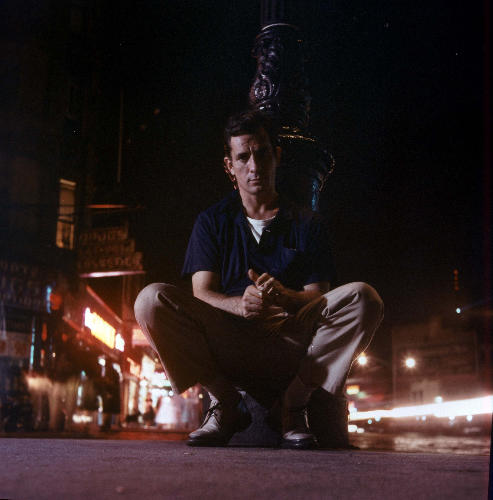
I enjoyed The Secret History and hopefully I'll post about it today or tonight. Eventhough it was about 650 pages, I read it in about four days. Now I'm breezing through Paul Auster's The Brooklyn Follies. I started it last night, but I should finish it during lunch today. It's great!
And maybe I'll get up here this fall and walk in Edna St. Vincent Millay's footsteps.
Now reading:
Paul Auster The Brooklyn Follies
Up next:
Marcel Proust Sodom and Gomorrah
Just finished:
Donna Tartt The Secret History
And maybe I'll get up here this fall and walk in Edna St. Vincent Millay's footsteps.
Now reading:
Paul Auster The Brooklyn Follies
Up next:
Marcel Proust Sodom and Gomorrah
Just finished:
Donna Tartt The Secret History
Wednesday, September 06, 2006
Enough! So long Jonathan Strange & Mr. Norrell. We hardly knew ye. Three hundred pages and another wasted lunch hour were about all I could take of Jonathan Strange.
I never got into Harry Potter and I can't deal with the adult version either. I enjoy a magic show, but I appreciate it for what it is. Magic, illusion, slight of hand, mind games. In Jonathan Strange, the people believe in magic for real and want to use it for practical purposes...war! I couldn't grasp it. I've already given it to a co-worker and have decided to read Donna Tart's The Secret History. A friend has recommended it and let me borrow it and so...I begin.
I never got into Harry Potter and I can't deal with the adult version either. I enjoy a magic show, but I appreciate it for what it is. Magic, illusion, slight of hand, mind games. In Jonathan Strange, the people believe in magic for real and want to use it for practical purposes...war! I couldn't grasp it. I've already given it to a co-worker and have decided to read Donna Tart's The Secret History. A friend has recommended it and let me borrow it and so...I begin.
125 pages Monday. 110 page Tuesday. And it's 8:17 a.m. and I've already read another 20 pages of Susanna Clarke's Jonathan Strange & Mr. Norrell. In most cases, reading this many pages so quickly would be a good sign. It would seem to mean that I was enjoying the book and that I was nearing some sort of end. However, it's neither. The book is such an easy read, that you just sort of flow along, not really becoming entranced by the magic, magicians or anything much for that matter. I've been reading it with a certain nonchalance that I'm not accustomed to. But it's the book that demands this. How else are we to make it through 1,006 pages? This book is a behemoth. I'm 255 pages in and I'm not even out of the first section. The second main character, Jonathan Strange, has just been introduced into the fold.
This book has received nothing but rave reviews, winning countless book of the year awards. Now, I really don't care about awards or reviews for that matter, but I do pay attention to them. Hopefully, I'll be able to make my own judgment. I'm not saying Clarke's book is bad or poorly written. I was just hoping to be sucked into the world of mystery and magic, with mist and eerie British settings, conducive to prolonged periods of reading as rain falls, quieting the world around me. Instead, I've been lulled into a world of practical magic, where Mr. Norrell wants to use his powers to aid in the war against Napoleon and the French. I don't want people being turned into pumpkins, but magicians fighting wars? I get it. I take it as a modern version of Merlin. Or something like that.
Maybe the next 250 pages will be the catalyst to invigorate me, to invigorate the book. I would think that after 500 pages a book would speak to me. May Jonathan Strange whisper for me to put him down? We shall see...
p.s. I am not reading this book as part of Carl V.'s Readers Imbibing Peril (R.I.P.)Autumn Challenge, but I may take up this challenge if I can get through Jonathan Strange.
This book has received nothing but rave reviews, winning countless book of the year awards. Now, I really don't care about awards or reviews for that matter, but I do pay attention to them. Hopefully, I'll be able to make my own judgment. I'm not saying Clarke's book is bad or poorly written. I was just hoping to be sucked into the world of mystery and magic, with mist and eerie British settings, conducive to prolonged periods of reading as rain falls, quieting the world around me. Instead, I've been lulled into a world of practical magic, where Mr. Norrell wants to use his powers to aid in the war against Napoleon and the French. I don't want people being turned into pumpkins, but magicians fighting wars? I get it. I take it as a modern version of Merlin. Or something like that.
Maybe the next 250 pages will be the catalyst to invigorate me, to invigorate the book. I would think that after 500 pages a book would speak to me. May Jonathan Strange whisper for me to put him down? We shall see...
p.s. I am not reading this book as part of Carl V.'s Readers Imbibing Peril (R.I.P.)Autumn Challenge, but I may take up this challenge if I can get through Jonathan Strange.
Tuesday, September 05, 2006
I admit that I had never heard of Rebecca West until sfp at Pages Turned wrote about her. What many already know is that West was a brilliant writer. I quickly realized this after reading only a few pages of her books. Then I read that she had an affair with H.G. Wells at the age of 19 and they had a son together. However, Wells was still married. His wife reportedly knew of the affair, but chose to ignore it. At this time, I was reading Wells's The Island of Dr. Moreau and by coincidence, A.S. Byatt's Possession. The turning point came when I began to see similarities between Byatt's Victorian romance and the real life Wells-West relationship.
In Possession, Randolph Henry Ash, a famous poet and writer in Victorian England begins a secret affair with Cristobel LaMotte, also a gifted writer, but supposed lesbian. At the time, Ash and LaMotte were writing epic poems and stories based on old British and Breton myths. It was a world of fantasy, shadows and metaphors, similar to modern science fiction that Wells was writing of. Now, I have no idea if any of this makes sense, but I enjoy finding these little nuances in novels and trying to discover if they have any relation to anything real.
Ash and LaMotte have this affair which produces a child, just as Wells's and West's did. Though LaMotte has the child in secret and gives it up for her sister to raise, there was a child. Also, LaMotte's lover Blanche tells Ash's wife that Cristobel and her husband are having an affair. Ash's wife chooses to ignore this news and continues to live her life with Ash as if nothing happened. This was similar to Wells's wife's knowledge of his fairly public affair with West and her choosing to remain with him.
And the last thing that struck me as interesting is that though West was well known and respected in her time, Wells is certainly the more famous writer of the duo. West is still read and studied, but nowhere near on par with Wells. In Possession, it is Ash that retains the fame and notoriety, while LaMotte becomes a subject for select scholars. Byatt may have simply been following the all too familiar path of women writers through history...neglect.
These are possibly only mere fancies I've created. Mere coincidences, not probabilities. But Byatt is a scholar of the Victorian and she would certainly have known about Wells and West, as many already do. Wouldn't it then be possible that she had this love affair in the back of her mind as she began writing Possession? I don't know and it probably doesn't matter in the end, but it added layers to the novel that I would have glanced over, were it not for the real life similarities.
In Possession, Randolph Henry Ash, a famous poet and writer in Victorian England begins a secret affair with Cristobel LaMotte, also a gifted writer, but supposed lesbian. At the time, Ash and LaMotte were writing epic poems and stories based on old British and Breton myths. It was a world of fantasy, shadows and metaphors, similar to modern science fiction that Wells was writing of. Now, I have no idea if any of this makes sense, but I enjoy finding these little nuances in novels and trying to discover if they have any relation to anything real.
Ash and LaMotte have this affair which produces a child, just as Wells's and West's did. Though LaMotte has the child in secret and gives it up for her sister to raise, there was a child. Also, LaMotte's lover Blanche tells Ash's wife that Cristobel and her husband are having an affair. Ash's wife chooses to ignore this news and continues to live her life with Ash as if nothing happened. This was similar to Wells's wife's knowledge of his fairly public affair with West and her choosing to remain with him.
And the last thing that struck me as interesting is that though West was well known and respected in her time, Wells is certainly the more famous writer of the duo. West is still read and studied, but nowhere near on par with Wells. In Possession, it is Ash that retains the fame and notoriety, while LaMotte becomes a subject for select scholars. Byatt may have simply been following the all too familiar path of women writers through history...neglect.
These are possibly only mere fancies I've created. Mere coincidences, not probabilities. But Byatt is a scholar of the Victorian and she would certainly have known about Wells and West, as many already do. Wouldn't it then be possible that she had this love affair in the back of her mind as she began writing Possession? I don't know and it probably doesn't matter in the end, but it added layers to the novel that I would have glanced over, were it not for the real life similarities.
Friday, September 01, 2006
I just finished A.S. Byatt's Possession and I'm going to write about it. But, I want to do a little research and find out more about the relationship between H.G. Wells and Rebecca West. The Victorian love story between Randolph Henry Ash and Cristobel LaMotte, in Possession seems to have far too many similarities to the Wells - West relationship than simple coincidence. I'm not taking notes or anything, just reading more about it all. It's actually more interesting than the novel itself.
Thursday, August 31, 2006
Cross-posted at Slaves of Golconda
I was talking to my father the other day about invention. From the beginning of history, people conducted their lives in similar ways. For thousands of years, news traveled the same way, wars were fought the same way, food was cooked the same way. Then in the mid-1800s, the world changed. People went to sleep one dreamfilled night in what could have been 1625 and awoke to a world that they didn't recognize. Trains, the telegraph and later indoor electricity. The Victorians were on the doorstep of the modern world. They were the first through the door. And the advent of modern science was the umbrella that covered their contemporary lives.
Yes, Darwin changed the way people thought of humans and therefore thought of themselves. His studies allowed for people to begin experiencing life like never before. Dimensions to worlds unknown opened up. Seances and spiritualism became common. Victorians were expanding their spiritual and religious realm. If what they thought about themselves had been altered by science, then maybe what they thought or knew of the dead and the soul, was different as well.
But it was writers like H.G. Wells, that uncovered hidden truths in them all. Writers like Wells made readers and the public rethink what it was to be human. Not just how they thought, but how the felt. The emotional turmoil pervading society had to be a sort of shell shock. If humans came from apes, then what does that do to our sense of who we think we are? Do we feel like humans? What does that even mean? Or could we be nothing more than wild creatures that wear clothing? What truly distinguishes us from 'them.'
Reading The Island of Dr. Moreau, these were the questions I was dealing with, repeatedly returning to. Rationalization is not the only thing that seperates us. Neither is knowledge or conscience. It must be all.
The narrator of Moreau, Prendick writes, Yet I felt an absolute assurance in my own mind that the Hyena-Swine was implicated in the rabbit-killing. A strange persuasion came upon me that, save for the grossness of the line, the grotesqueness of the forms, I had there before me the whole balance of human life in miniature, the whole interplay of instinct, reason, and fate in its simplest form.
These animal-human hybrids are humans in Prendick's estimation. Their ability to reason has changed them and has made them all too human like. However, I wonder if it was their strange mutation into human like beings that gave them reason or if they had always had reason and were now only able to communicate it. I fall into believing the latter in this case. Moreau had partly succeeded in his dungeon of science.
Prendick's experience on the lost island of mutation and vivisection, changed his way of feeling. It certainly changed the way he thought and what he thought about. Everything he thought he knew before, was turned upside down. He was left grasping.
I fell indeed into a morbid state, deep and enduring, alien to fear, which has left permanent scars upon my mind. I must confess I lost faith in the sanity of the world when I saw it suffering the painful disorder of this island.
A blind fate, a vast pitiless mechanism, seemed to cut and shape the fabric of existence, and I, Moreau (by his passion for research), Montgomery (by his passion for drink), the Beast People, with their instincts and mental restrictions, were torn and crushed, ruthlessly, inevitably, amid the infinite complexity of its incessant wheels. But this condition did not come all at once...I think indeed that I anticipate a little in speaking of it now.
This sentiment still reverberates today. I hear it echoed in Ginsberg's infamous first lines of Howl: I saw the best minds of my generation destroyed by madness, starving hysterical naked, dragging themselves through the negro streets at dawn looking for an angry fix. There's something primitive in Ginsberg's feeling of desolation and I sense the same in Prendick's lament.
As a society, we cope with watershed changes in a myriad of ways, but we have to deal with them nonetheless. But what does it mean to feel this way? Can we always change things for the better? Should we leave life, science, nature, better left untouched? I don't know.
I leave Dr. Moreau with more questions than answers...but I prefer literature that way. It is the discoveries I make on my own that validate my experiences.
I was talking to my father the other day about invention. From the beginning of history, people conducted their lives in similar ways. For thousands of years, news traveled the same way, wars were fought the same way, food was cooked the same way. Then in the mid-1800s, the world changed. People went to sleep one dreamfilled night in what could have been 1625 and awoke to a world that they didn't recognize. Trains, the telegraph and later indoor electricity. The Victorians were on the doorstep of the modern world. They were the first through the door. And the advent of modern science was the umbrella that covered their contemporary lives.
Yes, Darwin changed the way people thought of humans and therefore thought of themselves. His studies allowed for people to begin experiencing life like never before. Dimensions to worlds unknown opened up. Seances and spiritualism became common. Victorians were expanding their spiritual and religious realm. If what they thought about themselves had been altered by science, then maybe what they thought or knew of the dead and the soul, was different as well.
But it was writers like H.G. Wells, that uncovered hidden truths in them all. Writers like Wells made readers and the public rethink what it was to be human. Not just how they thought, but how the felt. The emotional turmoil pervading society had to be a sort of shell shock. If humans came from apes, then what does that do to our sense of who we think we are? Do we feel like humans? What does that even mean? Or could we be nothing more than wild creatures that wear clothing? What truly distinguishes us from 'them.'
Reading The Island of Dr. Moreau, these were the questions I was dealing with, repeatedly returning to. Rationalization is not the only thing that seperates us. Neither is knowledge or conscience. It must be all.
The narrator of Moreau, Prendick writes, Yet I felt an absolute assurance in my own mind that the Hyena-Swine was implicated in the rabbit-killing. A strange persuasion came upon me that, save for the grossness of the line, the grotesqueness of the forms, I had there before me the whole balance of human life in miniature, the whole interplay of instinct, reason, and fate in its simplest form.
These animal-human hybrids are humans in Prendick's estimation. Their ability to reason has changed them and has made them all too human like. However, I wonder if it was their strange mutation into human like beings that gave them reason or if they had always had reason and were now only able to communicate it. I fall into believing the latter in this case. Moreau had partly succeeded in his dungeon of science.
Prendick's experience on the lost island of mutation and vivisection, changed his way of feeling. It certainly changed the way he thought and what he thought about. Everything he thought he knew before, was turned upside down. He was left grasping.
I fell indeed into a morbid state, deep and enduring, alien to fear, which has left permanent scars upon my mind. I must confess I lost faith in the sanity of the world when I saw it suffering the painful disorder of this island.
A blind fate, a vast pitiless mechanism, seemed to cut and shape the fabric of existence, and I, Moreau (by his passion for research), Montgomery (by his passion for drink), the Beast People, with their instincts and mental restrictions, were torn and crushed, ruthlessly, inevitably, amid the infinite complexity of its incessant wheels. But this condition did not come all at once...I think indeed that I anticipate a little in speaking of it now.
This sentiment still reverberates today. I hear it echoed in Ginsberg's infamous first lines of Howl: I saw the best minds of my generation destroyed by madness, starving hysterical naked, dragging themselves through the negro streets at dawn looking for an angry fix. There's something primitive in Ginsberg's feeling of desolation and I sense the same in Prendick's lament.
As a society, we cope with watershed changes in a myriad of ways, but we have to deal with them nonetheless. But what does it mean to feel this way? Can we always change things for the better? Should we leave life, science, nature, better left untouched? I don't know.
I leave Dr. Moreau with more questions than answers...but I prefer literature that way. It is the discoveries I make on my own that validate my experiences.
Wednesday, August 30, 2006
When I decided to give up on writing for a living (thank you Emerson College and your Master's Degree in Print Journalism!) the world opened up to me and didn't close in and suffocate me like I envisioned. Everyday was a battle, questioning myself, questioning my writing. My writing didn't match up to my peers in grad school, let alone the rest of the literary world. The outlook was bleak. My decision had nothing to do with giving up. If anything, it was overcoming a frightening obstacle. I am now able to pursue careers in nearly any field, experiencing places and people without having to sit and write for an editor. I write for myself and that's all I really ever wanted. I'm not Pepys and I don't intend to imitate any such personal journalists, diarists, essayists or even modern bloggers. I've written about this before, but the past few days have been trying, stretching my will to points unknown.
"All writers read, but not all readers write." I don't know exactly who said that and it doesn't particularly matter. In fact, I'm repeating myself, because I know I've written a piece on this before. But the point is, I read. I'm not a critic or reviewer. I'm not articulate enough. I'm a reader. It's what give me breath each morning and keeps me awake at night, listening to the creaking of the window panes. It is what I've become.
Last night, I continued reading Allen Ginsberg's journals from the 1950s. It is this experience that has reinforced my decision. I could never compare to genius. He was about 30 years-old when he started these journals in 1954 and his mind grasped words, concepts, structure and history as well as anyone. I'll be 30 in three years, by then, maybe I'll be able to understand half of what I read. Ginsberg knew he was to be a 20th Century Whitman. It was his destiny to write of a life, his life. It was his salvation. My salvation comes in a form of voyeurism, where I get to sneak into his bedroom late at night and steal through his journal. My salvation is in this reading. My nirvana comes with the crafted printed word.
(For a related article, check out Emily Barton's review of Francine Prose's new book on writing in the NY Times.)
"All writers read, but not all readers write." I don't know exactly who said that and it doesn't particularly matter. In fact, I'm repeating myself, because I know I've written a piece on this before. But the point is, I read. I'm not a critic or reviewer. I'm not articulate enough. I'm a reader. It's what give me breath each morning and keeps me awake at night, listening to the creaking of the window panes. It is what I've become.
Last night, I continued reading Allen Ginsberg's journals from the 1950s. It is this experience that has reinforced my decision. I could never compare to genius. He was about 30 years-old when he started these journals in 1954 and his mind grasped words, concepts, structure and history as well as anyone. I'll be 30 in three years, by then, maybe I'll be able to understand half of what I read. Ginsberg knew he was to be a 20th Century Whitman. It was his destiny to write of a life, his life. It was his salvation. My salvation comes in a form of voyeurism, where I get to sneak into his bedroom late at night and steal through his journal. My salvation is in this reading. My nirvana comes with the crafted printed word.
(For a related article, check out Emily Barton's review of Francine Prose's new book on writing in the NY Times.)
Tuesday, August 29, 2006
I don't know why I haven't written in nearly a week. Probably just laziness. I've been reading Byatt's Possession and only have about 190 pages left. It's longer than I thought it was, but it's good. I'm not totally impressed with the language, but the story's fairly entertaining.
I've also been finishing The Island of Dr. Moreau. I'm still surprised how much I've enjoyed the book. I didn't finish my extra credit book, The Time Machine, but I Wells has been a more than pleasant surprise.
I've also been finishing The Island of Dr. Moreau. I'm still surprised how much I've enjoyed the book. I didn't finish my extra credit book, The Time Machine, but I Wells has been a more than pleasant surprise.
Tuesday, August 22, 2006
It was either last year or earlier this year that I first read Ward Just. Just is a former journalist and war correspondent. An Unfinished Season was a well written book, but it just didn't affect me. However, his latest novel (a Houghton Mifflin title)Forgetfulness reads like it was written by a man under intense pressure, using as few words possibly to convey a point or express something. Now I know why Just is heralded with such acclaim. Reading his prose is like taking part in a fight. Each line hits you harder and harder. By the end of the book, I already know I'm going to be KO'd.
She was trying to put her mind in another place altogether but was so far unsuccessful. She was unable to free herself of the forest. It seemed to her the very end of the known world so she conjured images of welcome aliens. For now she was in the hands of strangers, dubious men who did not belong here. So she spoke aloud, telling them to be careful, to take their time, not to be so rough. She was no longer young, as they could see. And she was injured and not herself. She thought to add, "Please."
Florette, a fifty-five year old French woman, married to an American and living in the shadow of the Pyrenees, has injured herself while taking a hike in the foothills of the mountains that lead to Spain and beyond. But the men taking her down the hill in a stretcher are strangers. Florette's pain comes in rushes and her mind wanders, but it's her desire for the mundane cigarette or to take a pee, that makes the situation too real. I can picture soldiers in Vietnam being mortally wounded, being husked back to awaiting choppers, but asking for a cigarette in their dying breaths. Here Just, reflects this intense and common urge onto the reader, making us all too aware that we would probably react the same way if the situation were reversed.
Now reading:
Ward Just Forgetfulness
H.G. Wells The Island of Dr. Moreau
H.G. Wells The Time Machine
Just finished:
Jack Kerouac Tristessa
Sarah Waters Fingersmith
She was trying to put her mind in another place altogether but was so far unsuccessful. She was unable to free herself of the forest. It seemed to her the very end of the known world so she conjured images of welcome aliens. For now she was in the hands of strangers, dubious men who did not belong here. So she spoke aloud, telling them to be careful, to take their time, not to be so rough. She was no longer young, as they could see. And she was injured and not herself. She thought to add, "Please."
Florette, a fifty-five year old French woman, married to an American and living in the shadow of the Pyrenees, has injured herself while taking a hike in the foothills of the mountains that lead to Spain and beyond. But the men taking her down the hill in a stretcher are strangers. Florette's pain comes in rushes and her mind wanders, but it's her desire for the mundane cigarette or to take a pee, that makes the situation too real. I can picture soldiers in Vietnam being mortally wounded, being husked back to awaiting choppers, but asking for a cigarette in their dying breaths. Here Just, reflects this intense and common urge onto the reader, making us all too aware that we would probably react the same way if the situation were reversed.
Now reading:
Ward Just Forgetfulness
H.G. Wells The Island of Dr. Moreau
H.G. Wells The Time Machine
Just finished:
Jack Kerouac Tristessa
Sarah Waters Fingersmith
Thursday, August 17, 2006
The start, I think I know too well. It is the first of my mistakes
I imagine a table, slick with blood. The blood is my mother's. There is too much of it. There is so much of it, I think it runs, like ink. I think, to save the boards beneath, the women have set down china bowls; and so the silence between my mother's cries are filled-drip drop! drip drop!-with what might be the staggered beating of clocks. Beyond the beat come other, fainter cries: the shrieks of lunatics, the shouts and scolds of nurses. For this is a madhouse. My mother is mad. The table has straps upon it to keep her from plunging to the floor; another strap separates her legs, so that I might emerge from between them. When I am born, the straps remain: the women fear she will tear me in two! They put me upon her bosom and my mouth finds out her breast. I suck, and the house falls silent about me. There is only, still, that falling blood-drip drop! drop drop!-the beat telling off the first few minutes of my life, the last of hers. For soon, the clocks run slow. My mother's bosom rises and falls, rises again; then sinks for ever.
I feel it, and suck harder. Then the women pluck me from her. And when I weep, they hit me.
- Sarah Waters Fingersmith
I imagine a table, slick with blood. The blood is my mother's. There is too much of it. There is so much of it, I think it runs, like ink. I think, to save the boards beneath, the women have set down china bowls; and so the silence between my mother's cries are filled-drip drop! drip drop!-with what might be the staggered beating of clocks. Beyond the beat come other, fainter cries: the shrieks of lunatics, the shouts and scolds of nurses. For this is a madhouse. My mother is mad. The table has straps upon it to keep her from plunging to the floor; another strap separates her legs, so that I might emerge from between them. When I am born, the straps remain: the women fear she will tear me in two! They put me upon her bosom and my mouth finds out her breast. I suck, and the house falls silent about me. There is only, still, that falling blood-drip drop! drop drop!-the beat telling off the first few minutes of my life, the last of hers. For soon, the clocks run slow. My mother's bosom rises and falls, rises again; then sinks for ever.
I feel it, and suck harder. Then the women pluck me from her. And when I weep, they hit me.
- Sarah Waters Fingersmith
Tuesday, August 15, 2006
It's getting darker earlier. With the 8 o'clock hour, comes the twilight. Only minutes later, the houses and trees whimper in the permanent shadows of night. Windows, lit from within act as beacons for the bugs repeatedly hitting the screens. They could be heard if all were quiet on the street. But it's never quiet. Not that quiet.
(But it's a perfect setting to read Sarah Water's Fingersmith)
(But it's a perfect setting to read Sarah Water's Fingersmith)
Monday, August 14, 2006
No one warned me. Hardy ends the last quarter of Jude the Obscure with such a devastating event, that I put the book down and just stared at it for a few moments. I won't give the details away and spoil the terribly sad plot. Once the catastrophe takes place, our heroine, Sue, becomes unhinged, taking to church and prayer daily, wanting nothing to do with poor Jude. The circumstances of their relationship are complicated to say the least, but Sue only compounds the situation at times. Sue was an individual and unique woman who wanted nothing to do of the traditional modes of life. She was not religious, but ended up changing her life based on repentence and religion. She was never keen on marriage, but ended up in loveless marriage, for the second time to the same man. This strong person was defeated by society and her own compulsive impulses, leaving Jude alone in the cruel world they once shared.
Yet, Hardy made Sue likeable past the point I would have thought. He didn't simply turn her over to make a point. He split up the two lovers, who were like one, to show how grief is assumed and love endured. Lincoln said a 'house divided can not stand' and I think that somehow fits this story. Together, Jude and Sue could withstand the taunts, jealousies and setbacks because they had one another. Seperated, they were destroyed souls, walking, but not living.
Just finished:
Thomas Hardy Jude the Obscure
Now reading:
H.G. Wells The Time Machine
Sarah Waters Fingersmith
On deck:
H.G. Wells The Island of Dr. Moreau
Yet, Hardy made Sue likeable past the point I would have thought. He didn't simply turn her over to make a point. He split up the two lovers, who were like one, to show how grief is assumed and love endured. Lincoln said a 'house divided can not stand' and I think that somehow fits this story. Together, Jude and Sue could withstand the taunts, jealousies and setbacks because they had one another. Seperated, they were destroyed souls, walking, but not living.
Just finished:
Thomas Hardy Jude the Obscure
Now reading:
H.G. Wells The Time Machine
Sarah Waters Fingersmith
On deck:
H.G. Wells The Island of Dr. Moreau
One meme, two meme, three meme...here's another via Litlove
1. First book to leave a lasting impression? Looking back, I guess William Saroyan's The Human Comedy has resonated with me through the years. Freshman year of high school, we had to read this and I never read anything like it before. It was the first 'real' thing I had read and Saroyan's language spoke to me and still does.
2. Which author would you most like to be? Before I thought about the questions, I figured I'd put Kerouac, but I don't think that's my choice. John Clellon Holmes was a brilliant and a truly gifted writer and friend of Ginsberg and Kerouac. He was married and considered more of a square than the rest of the Beats. He lived a normal suburban life and this pseudo-outsider status gave him great insight. I'd like to be John Clellon Holmes.
3. Name the book that has made you want to visit a place I was trying to think of something exotic and unique, but I kept on thinking of only two places...New York City in the 1950s and Walden Pond. I'll go with Walden Pond because I have been there and I'll leave 1950s New York and the automats in Times Square to my dreams.
4. Which contemporary author will be read in 100 years time? J.M. Coetzee
5. Which book would you recommend to a teenager reluctant to try 'literature'? In my head, I was thinking of a book each for a teenage boy and a book for a teenage girl, but didn't want to make a distinction. How about John Kennedy Toole's A Confederacy of Dunces?
6. Name your best recent literary discovery Within the past year, I've read Maeve Brennan, Margaret Atwood and Julian Barnes for the first time. I'll go with Maeve Brennan because her book Notes of the Long-Winded Lady were as close to E.B. White as one can get.
7. Which author's fictional world would you most like to live in? As an observer, sitting on a porch in Faulkner's Yoknapatawpha County.
8. Name your favorite poet Hart Crane? Kerouac? Auden? Edna St. Vincent Millay? Allen Ginsberg's poetry trumps them. It still blows me away.
9. What's the best non-fiction book you've read this year? E.B. White's essay, Second Tree from the Corner. But for a longer book, I'm reading Mark Anderson's Shakespeare by Another Name: the Biography of Edward de Vere, the Earl of Oxford.
10. Which auther do you think is much better than his/her reputation? I think E.B. White is widely recognized as children's author, but he is a brilliant writer and I can't say enough about him. But for this question, I'm going to choose my favorite writer, Jack Kerouac. Kerouac sometimes gets a quick look when people talk/write about literature. And if he is brought up, only On the Road is mentioned. However, his canon of work is varied and plentiful, but most of all, it's unique in vision and wonderfully written.
1. First book to leave a lasting impression? Looking back, I guess William Saroyan's The Human Comedy has resonated with me through the years. Freshman year of high school, we had to read this and I never read anything like it before. It was the first 'real' thing I had read and Saroyan's language spoke to me and still does.
2. Which author would you most like to be? Before I thought about the questions, I figured I'd put Kerouac, but I don't think that's my choice. John Clellon Holmes was a brilliant and a truly gifted writer and friend of Ginsberg and Kerouac. He was married and considered more of a square than the rest of the Beats. He lived a normal suburban life and this pseudo-outsider status gave him great insight. I'd like to be John Clellon Holmes.
3. Name the book that has made you want to visit a place I was trying to think of something exotic and unique, but I kept on thinking of only two places...New York City in the 1950s and Walden Pond. I'll go with Walden Pond because I have been there and I'll leave 1950s New York and the automats in Times Square to my dreams.
4. Which contemporary author will be read in 100 years time? J.M. Coetzee
5. Which book would you recommend to a teenager reluctant to try 'literature'? In my head, I was thinking of a book each for a teenage boy and a book for a teenage girl, but didn't want to make a distinction. How about John Kennedy Toole's A Confederacy of Dunces?
6. Name your best recent literary discovery Within the past year, I've read Maeve Brennan, Margaret Atwood and Julian Barnes for the first time. I'll go with Maeve Brennan because her book Notes of the Long-Winded Lady were as close to E.B. White as one can get.
7. Which author's fictional world would you most like to live in? As an observer, sitting on a porch in Faulkner's Yoknapatawpha County.
8. Name your favorite poet Hart Crane? Kerouac? Auden? Edna St. Vincent Millay? Allen Ginsberg's poetry trumps them. It still blows me away.
9. What's the best non-fiction book you've read this year? E.B. White's essay, Second Tree from the Corner. But for a longer book, I'm reading Mark Anderson's Shakespeare by Another Name: the Biography of Edward de Vere, the Earl of Oxford.
10. Which auther do you think is much better than his/her reputation? I think E.B. White is widely recognized as children's author, but he is a brilliant writer and I can't say enough about him. But for this question, I'm going to choose my favorite writer, Jack Kerouac. Kerouac sometimes gets a quick look when people talk/write about literature. And if he is brought up, only On the Road is mentioned. However, his canon of work is varied and plentiful, but most of all, it's unique in vision and wonderfully written.
Saturday, August 12, 2006
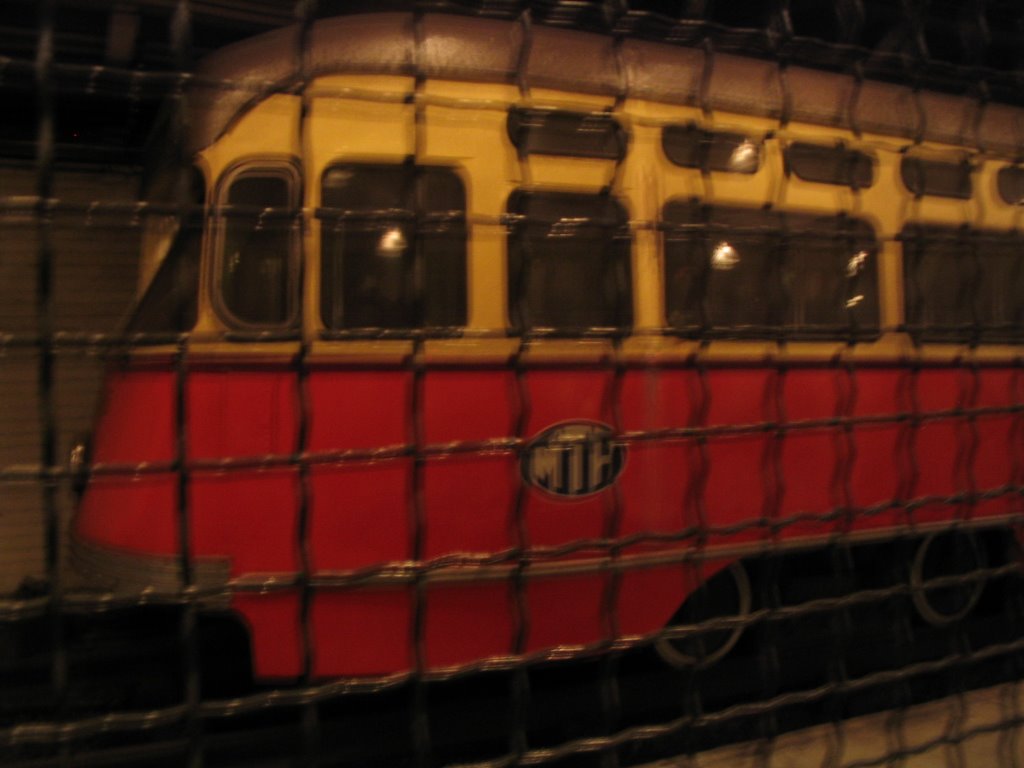


I was out all day today and had Jude on my mind the whole time. I kept wanting to get back to my apartment to see where Mr. Fawley led me today. Back to the arms of his first wife Arabella who suddenly showed up in Christminster? Did our hero compromise the marriage of his beloved cousin Sue and proclaim his undying love for her? Was it time for him to begin a life anew, with neither of the women? Well, I know he does end up with Sue before something terrible happens, but I still don't know what will become of Jude and his love. Hardy hints at the tragedy that befalls Jude's family with forebodings of failed marriages, early deaths and desertion. With it being 11:15 p.m. on a Saturday night and nowhere to go, I guess I'll indulge in a little more Jude tonight as Miles blows quietly in the background. Kind of Blue, Miles? Kind of blue.
Friday, August 11, 2006
I'm still surprised when a certain auther resonates with me. Thomas Hardy is one of these authors. I read Far from the Madding Crowd last year and couldn't get the characters out of my mind. Their British stoicism, wit, charm and good sense still felt real. The late 19th Century English countryside was alive as Bathesba, Gabriel Oak and Farmer Boldwood fought for one another, yearned for one another and slugged through days of hard work, quiet and solitude. The country life, I have nothing to compare it to, I'm a city guy, but the twists of love and struggle for survival were all too familiar.
In Jude the Obscure, Hardy once again awakens my latent sensitivities. Jude Fawley strives to learn. Day and night he dreams of going to college in the city of Christminster. For nearly ten years he works as a stone mason, rebuilding churches and colleges, working feet away from the scholars he wishes to become. Along the way, Jude gets married, his wife leaves him for Australia, he moves to Christminster, falls in love with his cousin Sue Bridehead and still remains outside the cloistered walls of academia.
The trees overhead deepened the gloom of the hour, and they dripped sadly upon him, impressing him with forebodings - illogical forebodings; for though he knew that he loved her he also knew that he could not be more to her than he was.
At this stage in my life, I relate to Jude at a level that I know would have been missed if I had read the novel at any other time in my life. I'm not doing what I want to do for a living. I'm not living my dream. For good and bad, life has gotten in the way. Bills, loans, rent, are some of the obstacles that make earning a living the be all end all of my existence for the moment. I know I can change my life, but for the moment, like Jude Fawley, I'm still working to get there. The dreams may be receding into the horizon, but they're out there still.
Now reading:
Thomas Hardy Jude the Obscure
Mark Anderson Shakespeare by Another Name: A Biography of Edward de Vere, Earl of Oxford, the Man Who Was Shakespeare
On deck:
Sarah Waters Fingersmith
In Jude the Obscure, Hardy once again awakens my latent sensitivities. Jude Fawley strives to learn. Day and night he dreams of going to college in the city of Christminster. For nearly ten years he works as a stone mason, rebuilding churches and colleges, working feet away from the scholars he wishes to become. Along the way, Jude gets married, his wife leaves him for Australia, he moves to Christminster, falls in love with his cousin Sue Bridehead and still remains outside the cloistered walls of academia.
The trees overhead deepened the gloom of the hour, and they dripped sadly upon him, impressing him with forebodings - illogical forebodings; for though he knew that he loved her he also knew that he could not be more to her than he was.
At this stage in my life, I relate to Jude at a level that I know would have been missed if I had read the novel at any other time in my life. I'm not doing what I want to do for a living. I'm not living my dream. For good and bad, life has gotten in the way. Bills, loans, rent, are some of the obstacles that make earning a living the be all end all of my existence for the moment. I know I can change my life, but for the moment, like Jude Fawley, I'm still working to get there. The dreams may be receding into the horizon, but they're out there still.
Now reading:
Thomas Hardy Jude the Obscure
Mark Anderson Shakespeare by Another Name: A Biography of Edward de Vere, Earl of Oxford, the Man Who Was Shakespeare
On deck:
Sarah Waters Fingersmith
Thursday, August 10, 2006

I just spent $19 on 5 books on Amazon. I was hoping that since I bought all the books from the same seller that I'd get a discount on shipping, but not so much. I was going to cancel the transaction, but figured, hey, less than $4 a book, not bad. Now the letters of E.B. White, E.B. White: What a Writer, Kerouac's San Francisco Blues (I think I lost my old copy,) H.G. Wells's The Island of Dr. Moreau, for the Slaves' new read, and John Clellon Holmes's The Horn will all be occupants of my library in 2-4 business days. Such is the life of a bibliophile. Exhilrating, I know.
Wednesday, August 09, 2006
I saw this list a few days ago over at Danielle's A Work in Progress and thought I'd take a shot. I do love lists...
1. ONE BOOK THAT CHANGED YOUR LIFE Remarque's classic All Quiet on the Western Front was the book that got me reading. It got me interested in lives outside my own. I was in seventh grade and had to do my first big book report. This book opened up the rest of the world for me and I haven't stopped since.
2. ONE BOOK THAT YOU'VE READ MORE THAN ONCE Moby Dick is the book I've read the most, only about three times. I think it's the greatest novel in the English language.
3. ONE BOOK THAT YOU'D WANT ON A DESERT ISLAND I would have to say Don Quixote. I couldn't imagine getting tired of it, no matter how long I stayed on the island.
4. ONE BOOK THAT MADE YOU LAUGH John Kennedy Toole's A Confederacy of Dunces has to be the smartest, funniest, serious book I've ever read. A perfect read.
5. ONE BOOK THAT MADE YOU CRY I can't say I've cried while reading or after I've finished a book. But I could have cried for Prince Myshkin in Dostoevsky's The Idiot or Kate Chopin's The Awakening.
6. ONE BOOK THAT YOU WISH HAD BEEN WRITTEN Danielle mentioned Harper Lee's second novel and I agree with that. I would have liked to see Whitman try his hand at a novel. An epic of America, the Civil War, Brooklyn. That I would have read.
7. ONE BOOK THAT YOU WISH HAD NEVER BEEN WRITTEN Mein Kampf
8. ONE BOOK YOU ARE CURRENTLY READING E.M. Forster's first novel, Where Angels Fear to Tread. My first Forster and I can't say I'm highly impressed.
9. ONE BOOK YOU'VE BEEN MEANING TO READ Shelby Foote's first volume of the Civil War. I'm halfway through, but haven't finished it yet. I'll get there. Book I've been meaning to read, but have never opened? List is endless...
Thanks for the idea Danielle!
1. ONE BOOK THAT CHANGED YOUR LIFE Remarque's classic All Quiet on the Western Front was the book that got me reading. It got me interested in lives outside my own. I was in seventh grade and had to do my first big book report. This book opened up the rest of the world for me and I haven't stopped since.
2. ONE BOOK THAT YOU'VE READ MORE THAN ONCE Moby Dick is the book I've read the most, only about three times. I think it's the greatest novel in the English language.
3. ONE BOOK THAT YOU'D WANT ON A DESERT ISLAND I would have to say Don Quixote. I couldn't imagine getting tired of it, no matter how long I stayed on the island.
4. ONE BOOK THAT MADE YOU LAUGH John Kennedy Toole's A Confederacy of Dunces has to be the smartest, funniest, serious book I've ever read. A perfect read.
5. ONE BOOK THAT MADE YOU CRY I can't say I've cried while reading or after I've finished a book. But I could have cried for Prince Myshkin in Dostoevsky's The Idiot or Kate Chopin's The Awakening.
6. ONE BOOK THAT YOU WISH HAD BEEN WRITTEN Danielle mentioned Harper Lee's second novel and I agree with that. I would have liked to see Whitman try his hand at a novel. An epic of America, the Civil War, Brooklyn. That I would have read.
7. ONE BOOK THAT YOU WISH HAD NEVER BEEN WRITTEN Mein Kampf
8. ONE BOOK YOU ARE CURRENTLY READING E.M. Forster's first novel, Where Angels Fear to Tread. My first Forster and I can't say I'm highly impressed.
9. ONE BOOK YOU'VE BEEN MEANING TO READ Shelby Foote's first volume of the Civil War. I'm halfway through, but haven't finished it yet. I'll get there. Book I've been meaning to read, but have never opened? List is endless...
Thanks for the idea Danielle!
Tuesday, August 08, 2006
Just finish it. That's what I keep telling myself every time I pick up another book this summer. I've read a few these past two months, but nowhere near as many as I would have liked. But I've started more books than normal. Jude the Obscure, The Line of Beauty, Where Angels Fear to Tread and Jonathan Strange and Mr. Norrell. I've started and read at least 25 pages in each over the past three days and that doesn't count the incredible biography of Edward de Vere,Shakespeare: By Another Name by journalist Mark Anderson.
Time for some self-prescribed discipline. I intend to finish Forster's Where Angels Fear to Trend this week and then get into Alan Hollinghurst's The Line of Beauty. That's that.
Now that my schedule's in place I've been wanting to write about Anderson's stunning work that claims Edward de Vere is in fact the author of Shakespeare's work. I don't necessarily care who wrote the plays, whether it be William Shakespeare the actor, Edward de Vere, or anyone else, but I do want to know is who wrote them. I think it's integral to our history, to the understanding of ourselves, to know the truth and it won't change the significance of the plays...at least not to me.
After about five pages, I was mesmerized by the parallels Anderson was making between de Vere (the Earl of Oxford) and the Shakespeare plays. After 100 pages I've nearly been convinced that William Shakespeare the actor was not the author.
There are some passages that hit upon the improbability of the actor Shakespeare even being able to write some of the plays. Anderson explains that Laurence Nowell was de Vere's tutor at Lord Burghley's estate in 1563 when he translated the only known copy of Beowulf in the English language and inscribed it to de Vere.
Beowulf and the original Hamlet myth ("Amleth") are cousins from the same family of Scandanavian folklore. Shake-speare uses both as sources for Hamlet. Once Hamlet kills his uncle Claudius, Shake-speare stops following "Amleth" and starts following Beowulf. It is Beowulf who fights the mortal duel with poison and sword; it is Beowulf who turns to his loyal comrade (Wiglaf in Beowulf; Horatio in Hamlet) to recite a dying appeal to carry his name forward; and it is Beowulf that carries on after its hero's death to dramatize a succession struggle for the throne brought on by an invading foreign nation.
By the time Hamlet was written and performed, I'm sure William Shakespeare may have had opportunity to read the myth and make it his own, but in de Vere, it was ingrained in him.
And, though not definitive in any sense of the word, de Vere's life is too similar to the plays to be mere coincidence.
Perhaps the most autobiographical play in Shakespeare is Hamlet, with multifarious connections to de Vere's life that are discussed in nearly every chapter of this book. For example, when de Vere was traveling through France at age twenty-six, he encountered a Teutonic prince who paraded his troops before de Vere's eyes. Soon thereafter, de Vere boarded a ship that was overtaken by pirates, and de Vere was stipped naked and left on the English shore. In Act 4 of Hamlet, in a sequence that is in no known source text for the play, Hamlet first witnesses the invading Prince Fortinbras's troops and then boards a ship that is overtaken by pirates, in an ordeal that leaves a humiliated Hamlet stripped naked on the Danish shore.
Though the books is saturated with such assurances, there are sure to be many people who either won't read the book or who would read the book, but still defend Shakespeare the actor. To each their own. I've had a few discussions with friends about de Vere and the authorship of Shakespeare's plays and I've been met with much resistance. I don't know if it's too much of a change to the fundamentals of our lives if Shakespeare the actor was nothing more than a performer and not the author of our memories. But if de Vere is the true man behind the greatest literature, why not give credit to the man who has lived in the shadows for too long? It is plausible and so far, probable.
Now reading:
Mark Anders "Shakespeare" By Another Name
E.M. Forster Where Angels Fear to Tread
Alan Hollinghurst The Line of Beauty
Just finished:
Charles Nicholl The Reckoning: The Murder of Christopher Marlowe
Up next:
Thomas Hardy Jude the Obscure
Susanna Clarke Jonathan Strange and Mr. Norrell
Time for some self-prescribed discipline. I intend to finish Forster's Where Angels Fear to Trend this week and then get into Alan Hollinghurst's The Line of Beauty. That's that.
Now that my schedule's in place I've been wanting to write about Anderson's stunning work that claims Edward de Vere is in fact the author of Shakespeare's work. I don't necessarily care who wrote the plays, whether it be William Shakespeare the actor, Edward de Vere, or anyone else, but I do want to know is who wrote them. I think it's integral to our history, to the understanding of ourselves, to know the truth and it won't change the significance of the plays...at least not to me.
After about five pages, I was mesmerized by the parallels Anderson was making between de Vere (the Earl of Oxford) and the Shakespeare plays. After 100 pages I've nearly been convinced that William Shakespeare the actor was not the author.
There are some passages that hit upon the improbability of the actor Shakespeare even being able to write some of the plays. Anderson explains that Laurence Nowell was de Vere's tutor at Lord Burghley's estate in 1563 when he translated the only known copy of Beowulf in the English language and inscribed it to de Vere.
Beowulf and the original Hamlet myth ("Amleth") are cousins from the same family of Scandanavian folklore. Shake-speare uses both as sources for Hamlet. Once Hamlet kills his uncle Claudius, Shake-speare stops following "Amleth" and starts following Beowulf. It is Beowulf who fights the mortal duel with poison and sword; it is Beowulf who turns to his loyal comrade (Wiglaf in Beowulf; Horatio in Hamlet) to recite a dying appeal to carry his name forward; and it is Beowulf that carries on after its hero's death to dramatize a succession struggle for the throne brought on by an invading foreign nation.
By the time Hamlet was written and performed, I'm sure William Shakespeare may have had opportunity to read the myth and make it his own, but in de Vere, it was ingrained in him.
And, though not definitive in any sense of the word, de Vere's life is too similar to the plays to be mere coincidence.
Perhaps the most autobiographical play in Shakespeare is Hamlet, with multifarious connections to de Vere's life that are discussed in nearly every chapter of this book. For example, when de Vere was traveling through France at age twenty-six, he encountered a Teutonic prince who paraded his troops before de Vere's eyes. Soon thereafter, de Vere boarded a ship that was overtaken by pirates, and de Vere was stipped naked and left on the English shore. In Act 4 of Hamlet, in a sequence that is in no known source text for the play, Hamlet first witnesses the invading Prince Fortinbras's troops and then boards a ship that is overtaken by pirates, in an ordeal that leaves a humiliated Hamlet stripped naked on the Danish shore.
Though the books is saturated with such assurances, there are sure to be many people who either won't read the book or who would read the book, but still defend Shakespeare the actor. To each their own. I've had a few discussions with friends about de Vere and the authorship of Shakespeare's plays and I've been met with much resistance. I don't know if it's too much of a change to the fundamentals of our lives if Shakespeare the actor was nothing more than a performer and not the author of our memories. But if de Vere is the true man behind the greatest literature, why not give credit to the man who has lived in the shadows for too long? It is plausible and so far, probable.
Now reading:
Mark Anders "Shakespeare" By Another Name
E.M. Forster Where Angels Fear to Tread
Alan Hollinghurst The Line of Beauty
Just finished:
Charles Nicholl The Reckoning: The Murder of Christopher Marlowe
Up next:
Thomas Hardy Jude the Obscure
Susanna Clarke Jonathan Strange and Mr. Norrell
Saturday, July 22, 2006
I don't know much about loss. I know what longing is, but with loss, I'm a novice. I've had a few grandparents pass away during my life, but no uncles, cousins or parents. A couple friends committed suicide within a couple of years of one another. I guess that's the closest to loss that I've come that has seriously affected me. But I didn't love them so the loss seems vacant almost. I was mad at them more than anything and I still am. Stll, this loss is death and I know it can take on any personality, any form. Loss is a shapeshifter.
For the first half of Wallace Stegner's Crossing to Safety I was fooled by the author into believing I was reading a striking book on common experiences. Stegner's narrator, Larry Morgan, was a writer teaching at a Wisconsin college when he and his wife Sally meet the two people that will irrevocably change their lives. I have heard of people's lives being changed by a dramatic or traumatic event-a death, a divorce, a winning lottery ticket, a failed exam. I never heard of of anybody's life but ours being changed by a dinner party.
A lifelong friendship is formed that night, the bonds of which are never broken. A truly remarkable 4-way relationship. But it's the unexpected event that takes place on a harmless camping trip that has kept me thinking and rethinking what love and loss mean. Sally is stricken with Polio. The jubilant 30-year old becomes reliant on crutches and braces for the rest of her life. That's in the late 1930's. This to me is like a loss of life. Not to Sally, or Larry for that matter. Without function of my body parts, how could I live the life I had? Could I live a different one, one that would be dictated by my ability to get around, slowly and painfully with crutches and braces? But Sally never seems to hesitate. As readers we aren't brought into the years of struggle she must have gone through. Instead, Stegner simply refers to it in passing a few times. She has a sick body, but a lively spirit type of thing.
Now in the 1970's, Larry and Sally are visiting the Lang's on their much beloved estate in Vermont. It's the last time all four will be together. And they know it. Charity Lang is dying of cancer and has called the Morgans there to have her entire family around. Planning her last breaths till the end, just like she planned and scheduled the rest of her life and everyone else around her.
It was her death. She had a right to handle it her own way. But I felt sorry for Sid, a reluctant stoic, and I dreaded the coming hour or two when I would be alone with him. I was the person he was most likely to confide in, and I feared his confidence and had on tap no word of consolation or comfort. It crossed my mind, while I sat waiting on the lawn above the green and blue view, that down under his anguish and panic he might even look forward to her death as a release. Then I decided not. Charity had mastered him, but also she supported him. She not only ran his life, she was his life. I didn't like to think what would happen to him with her gone. His resistance and resentment were only expressions of his dependence. Sally resented her crutches, too, but without them she would have been hardly more than a broken stick with eyes.
It's this eventual loss that I've yet to experience and I'm in no rush to witness. But it encompasses humanity in tow relationships between husbands and wives. Is this passing something any of us can prepare for? Don't we block this inevitability out of our minds, banish death to the darkness of our knowing? At least I try to.
At times Stegner scared me with his frankness...with the truth. It's uncharacteristic to read such things about love and life. It's all too real, a little to close for comfort, but Stegner steps over the boundary of conventional literature and christens the reader with the true word of truth.
Tuesday, July 11, 2006
If I had to describe Malamud's The Assistant after the first 100 pages or so, I'm certain my summary would have failed miserably. It is not a story about deprivation or about loneliness. It is not a story about lost chances and desperation. It is a story about survival and hope. It is a story about redemption and aspiration. The heart of the novel is how we all struggle to survive in the world we live in, in the world that has formed around us. Sometimes it's because of our own actions, but oftentimes, it's the environment that shapes our world and darkens the doorways. But we always have hope. Morris Bober had hope. Helen Bober had hope. Frank Alpine had hope. And in times of disaster, when the lighted path fails to show itself, hope is our Beatrice. Whether it's Frank's hope to repay a debt that has sunken his soul or whether it's Helen's hope to go to college and better her life. This hope gets us through the long impenetrable months of solitude and loneliness.
Waking, she fought an old distrust of the broken-faced stranger, without success. The stranger had changed, grown unstrange. That was the clue to what was happening to her. One day he seemed unknown, lurking at the far end of an unlit cellar; next he was standing in sunlight, a smile on his face, as if all she knew of him and all she didn't, had fused into a healed and easily remembered whole.
Malamud gave Frank the passion and Helen the feelings and thoughts. The dichotomy of characters intriguing...partly because it goes against stereoptypes, but mostly because it gave the book movement. The characters, though sometimes lacking vigor to struggle through life, became people I knew. They were me and I was them. Part Frank, part Helen, part Morris. Malamud captured my humanity in a few characters in a couple hundred pages. Knowing my thoughts and writing what I would have said, Malamud is the voice of the street of New York and Boston. Moscow and Chicago. He knows us all so well.
Just finished:
Bernard Malamud The Assistant
Now reading:
Wallace Stegner Crossing to Safety
Plutarch Makers of Rome
Monday, July 10, 2006
Almost four weeks away from the blogosphere. My hiatus began with computer problems, making posts became impossible. Then one week of not blogging turned into two weeks of lounging and trying to enjoy the summer. I took from the midsummer what I could and my reading and writing ways are back. I only read Walker Percy's The Moviegoer and Michael Dirda's Book by Book: Notes on Reading and Life.
My summer reading books are piling up beneath my desk, ever closer to toppling over and scattering under the bed. Listening to the MLB All-Star Home Run contest, I'm trying to finish Bernard Malamud's The Assistant. I always thought it was about a young professional in the corporate world. Don't ask why. I just did. I couldn't have been further from the truth and that's a good thing. Malamud has painted a painfully real portrayal of not just urban life, but life. A struggling grocer in New York, Morris Bober, is mugged by two assailants. Alone, this act is nothing too unusual. However, one of the thieves comes back to help the grocer, to repay what he stole. He doesn't tell the grocer, or the grocer's wife that he was one of the robbers, but he works hard in the store paying the money back, but continuing to pilfer here and there.
It's a story of redemption, religion and love. Because not only does Frank Alpine try and redeem himself, but he falls for Morris's daughter Helen. For any male reader, Helen is the ideal.
He asked her what book she was reading.
The Idiot. Do you know it?
No. What's it about?
It's a novel.
I'd rather read the truth, he said.
It is the truth.
This is Helen. This is my Helen.
Now reading:
Bernard Malamud The Assistant
Plutarch The Makers of Rome
My summer reading books are piling up beneath my desk, ever closer to toppling over and scattering under the bed. Listening to the MLB All-Star Home Run contest, I'm trying to finish Bernard Malamud's The Assistant. I always thought it was about a young professional in the corporate world. Don't ask why. I just did. I couldn't have been further from the truth and that's a good thing. Malamud has painted a painfully real portrayal of not just urban life, but life. A struggling grocer in New York, Morris Bober, is mugged by two assailants. Alone, this act is nothing too unusual. However, one of the thieves comes back to help the grocer, to repay what he stole. He doesn't tell the grocer, or the grocer's wife that he was one of the robbers, but he works hard in the store paying the money back, but continuing to pilfer here and there.
It's a story of redemption, religion and love. Because not only does Frank Alpine try and redeem himself, but he falls for Morris's daughter Helen. For any male reader, Helen is the ideal.
He asked her what book she was reading.
The Idiot. Do you know it?
No. What's it about?
It's a novel.
I'd rather read the truth, he said.
It is the truth.
This is Helen. This is my Helen.
Now reading:
Bernard Malamud The Assistant
Plutarch The Makers of Rome
Friday, June 23, 2006
After reading Stefanie's post on Proust I thought that I'd post the famous Proust Questionaire.
Here are Proust's answers at 7:
What do you regard as the lowest depth of misery? To be separated from Mama
Where would you like to live? In the country of the Ideal, or, rather, of my ideal
What is your idea of earthly happiness? To live in contact with those I love, with the beauties of nature, with a quantity of books and music, and to have, within easy distance, a French theater
To what faults do you feel most indulgent? To a life deprived of the works of genius
Who are your favorite heroes of fiction? Those of romance and poetry, those who are the expression of an ideal rather than an imitation of the real
Who are your favorite characters in history? A mixture of Socrates, Pericles, Mahomet, Pliny the Younger and Augustin Thierry
Who are your favorite heroines in real life? A woman of genius leading an ordinary life
Who are your favorite heroines of fiction? Those who are more than women without ceasing to be womanly; everything that is tender, poetic, pure and in every way beautiful
Your favorite painter? Meissonier
Your favorite musician? Mozart
The quality you most admire in a man? Intelligence, moral sense
The quality you most admire in a woman? Gentleness, naturalness, intelligence
Your favorite virtue? All virtues that are not limited to a sect: the universal virtues
Your favorite occupation? Reading, dreaming, and writing verse
Who would you have liked to be? Since the question does not arise, I prefer not to answer it. All the same, I should very much have liked to be Pliny the Younger.
Seven years later, age 20:
Your most marked characteristic? A craving to be loved, or, to be more precise, to be caressed and spoiled rather than to be admired
The quality you most like in a man? Feminine charm
The quality you most like in a woman? A man's virtues, and frankness in friendship
What do you most value in your friends? Tenderness - provided they possess a physical charm which makes their tenderness worth having
What is your principle defect? Lack of understanding; weakness of will
What is your favorite occupation? Loving
What is your dream of happiness? Not, I fear, a very elevated one. I really haven't the courage to say what it is, and if I did I should probably destroy it by the mere fact of putting it into words.
What to your mind would be the greatest of misfortunes? Never to have known my mother or my grandmother
What would you like to be? Myself - as those whom I admire would like me to be
In what country would you like to live? One where certain things that I want would be realized - _and where feelings of tenderness would always be reciprocated_. [Proust's underlining]
What is your favorite color? Beauty lies not in colors but in thier harmony
What is your favorite flower? Hers - but apart from that, all
What is your favorite bird? The swallow
Who are your favorite prose writers? At the moment, Anatole France and Pierre Loti
Who are your favoite poets? Baudelaire and Alfred de Vigny
Who is your favorite hero of fiction? Hamlet
Who are your favorite heroines of fiction? Phedre (crossed out) Berenice
Who are your favorite composers? Beethoven, Wagner, Shuhmann
Who are your favorite painters? Leonardo da Vinci, Rembrandt
Who are your heroes in real life? Monsieur Darlu, Monsieur Boutroux (professors)
Who are your favorite heroines of history? Cleopatra
What are your favorite names? I only have one at a time
What is it you most dislike? My own worst qualities
What historical figures do you most despise? I am not sufficiently educated to say
What event in military history do you most admire? My own enlistment as a volunteer!
What reform do you most admire? (no response)
What natural gift would you most like to possess? Will power and irresistible charm
How would you like to die? A better man than I am, and much beloved
What is your present state of mind? Annoyance at having to think about myself in order to answer these questions
To what faults do you feel most indulgent? Those that I understand
What is your motto? I prefer not to say, for fear it might bring me bad luck.
Yes, 7 and 20. It almost doesn't seem real, that someone, let alone at such young and impressionable ages, could answer these questions with such perfection.
I'd post my responses, but then people may see me for who I really am and that may be better left unseen.
Here are Proust's answers at 7:
What do you regard as the lowest depth of misery? To be separated from Mama
Where would you like to live? In the country of the Ideal, or, rather, of my ideal
What is your idea of earthly happiness? To live in contact with those I love, with the beauties of nature, with a quantity of books and music, and to have, within easy distance, a French theater
To what faults do you feel most indulgent? To a life deprived of the works of genius
Who are your favorite heroes of fiction? Those of romance and poetry, those who are the expression of an ideal rather than an imitation of the real
Who are your favorite characters in history? A mixture of Socrates, Pericles, Mahomet, Pliny the Younger and Augustin Thierry
Who are your favorite heroines in real life? A woman of genius leading an ordinary life
Who are your favorite heroines of fiction? Those who are more than women without ceasing to be womanly; everything that is tender, poetic, pure and in every way beautiful
Your favorite painter? Meissonier
Your favorite musician? Mozart
The quality you most admire in a man? Intelligence, moral sense
The quality you most admire in a woman? Gentleness, naturalness, intelligence
Your favorite virtue? All virtues that are not limited to a sect: the universal virtues
Your favorite occupation? Reading, dreaming, and writing verse
Who would you have liked to be? Since the question does not arise, I prefer not to answer it. All the same, I should very much have liked to be Pliny the Younger.
Seven years later, age 20:
Your most marked characteristic? A craving to be loved, or, to be more precise, to be caressed and spoiled rather than to be admired
The quality you most like in a man? Feminine charm
The quality you most like in a woman? A man's virtues, and frankness in friendship
What do you most value in your friends? Tenderness - provided they possess a physical charm which makes their tenderness worth having
What is your principle defect? Lack of understanding; weakness of will
What is your favorite occupation? Loving
What is your dream of happiness? Not, I fear, a very elevated one. I really haven't the courage to say what it is, and if I did I should probably destroy it by the mere fact of putting it into words.
What to your mind would be the greatest of misfortunes? Never to have known my mother or my grandmother
What would you like to be? Myself - as those whom I admire would like me to be
In what country would you like to live? One where certain things that I want would be realized - _and where feelings of tenderness would always be reciprocated_. [Proust's underlining]
What is your favorite color? Beauty lies not in colors but in thier harmony
What is your favorite flower? Hers - but apart from that, all
What is your favorite bird? The swallow
Who are your favorite prose writers? At the moment, Anatole France and Pierre Loti
Who are your favoite poets? Baudelaire and Alfred de Vigny
Who is your favorite hero of fiction? Hamlet
Who are your favorite heroines of fiction? Phedre (crossed out) Berenice
Who are your favorite composers? Beethoven, Wagner, Shuhmann
Who are your favorite painters? Leonardo da Vinci, Rembrandt
Who are your heroes in real life? Monsieur Darlu, Monsieur Boutroux (professors)
Who are your favorite heroines of history? Cleopatra
What are your favorite names? I only have one at a time
What is it you most dislike? My own worst qualities
What historical figures do you most despise? I am not sufficiently educated to say
What event in military history do you most admire? My own enlistment as a volunteer!
What reform do you most admire? (no response)
What natural gift would you most like to possess? Will power and irresistible charm
How would you like to die? A better man than I am, and much beloved
What is your present state of mind? Annoyance at having to think about myself in order to answer these questions
To what faults do you feel most indulgent? Those that I understand
What is your motto? I prefer not to say, for fear it might bring me bad luck.
Yes, 7 and 20. It almost doesn't seem real, that someone, let alone at such young and impressionable ages, could answer these questions with such perfection.
I'd post my responses, but then people may see me for who I really am and that may be better left unseen.
Wednesday, June 21, 2006
When we set out to do something, does it ever happen as we expected? Going to the grocery store, do we only stick the listed items? Ok, that's maybe a bad analogy for the voyage of the pilgrims on the Mayflower, but I'm trying here. Imagine setting out for a new world, still vastly undiscovered and certainly unreliable.
When he later wrote about the voyage of the Mayflower, Bradford devoted only a few paragraphs to describing a passage that lasted more than two months. The physical and psychological punishment endured by the passengers in the dark and dripping 'tween decks was compounded by the terrifying lack of information they possessed concerning their ultimate destination. All they knew for certain was that if they did somehow succeed in crossing this three-thousand-mile stretch of ocean, no one-except perhaps for some hostile Indians-would be there to greet them.
I may not have agreed with their religion, but those on the Mayflower had conviction like I've never known. Their voyage to America was supposed to be the great beginning of a life of religious freedom. Basically kicked out of England at the beginning of the 17th Century for their reformist views on the Church, the English Separatists found refuge in Leiden, Holland. After nearly 12 years in Holland, they were beginning to wear out their welcome. Next stop America.
Young William Bradford was one of the first men of the congregation to sign up for the voyage. However, Bradford and his wife Dorothy, decided to leave their son John in Holland, presumably with her family. It would have been a dangerous passage and then the settlement would be another terrible ordeal. I don't know if William and Dorothy were right in leaving their son behind, but I want to find out.
Now reading:
Nathaniel Philbrick Mayflower
Jeanette Winters Lighthousekeeping
When he later wrote about the voyage of the Mayflower, Bradford devoted only a few paragraphs to describing a passage that lasted more than two months. The physical and psychological punishment endured by the passengers in the dark and dripping 'tween decks was compounded by the terrifying lack of information they possessed concerning their ultimate destination. All they knew for certain was that if they did somehow succeed in crossing this three-thousand-mile stretch of ocean, no one-except perhaps for some hostile Indians-would be there to greet them.
I may not have agreed with their religion, but those on the Mayflower had conviction like I've never known. Their voyage to America was supposed to be the great beginning of a life of religious freedom. Basically kicked out of England at the beginning of the 17th Century for their reformist views on the Church, the English Separatists found refuge in Leiden, Holland. After nearly 12 years in Holland, they were beginning to wear out their welcome. Next stop America.
Young William Bradford was one of the first men of the congregation to sign up for the voyage. However, Bradford and his wife Dorothy, decided to leave their son John in Holland, presumably with her family. It would have been a dangerous passage and then the settlement would be another terrible ordeal. I don't know if William and Dorothy were right in leaving their son behind, but I want to find out.
Now reading:
Nathaniel Philbrick Mayflower
Jeanette Winters Lighthousekeeping
Tuesday, June 20, 2006
My head's been all over the place recently. That's my excuse for lack of posts. I'm still reading Atwood's The Blind Assassin and I'm getting deep into it. But I also bought Nathaniel Philbrick's Mayflower. I wanted to read a work of non-fiction, so I got this hardcover...at Costco. Hey, I'm an advocate of independent bookstores, but it's a brand new hardcover and it was only $16. I couldn't pass it up. Ok, I could have, but I didn't. I lack will power. Always have. So that's two books I'm reading and I don't know how to write about non-fiction, but I'll give it a go tomorrow.
It was supposed to be in the low 80s today in Boston with chance of rain. Yesterday was 90 and Sunday it was about 98 or 114 degrees. Today, at 81 or 82, I thought it would feel like a reprieve. It didn't. Anyway, I went to my courtyard to read, but only lasted about 15 minutes there before scampering inside, making straight away for the cooler aisles of the library. Three books and 30 minutes later, I was on my way back outside and off to the dreaded cubicle life. At least Kenneth Harvey's The Town That Forgot How to Breathe, Marina Lewycka's A Short History of Tractors in Ukrainian and Jeanette Winterson's Lighthousekeeping were tucked, and stuck, under my arm, set to keep me company in my cube. If misery loves company, boredom and heat love books.
It was supposed to be in the low 80s today in Boston with chance of rain. Yesterday was 90 and Sunday it was about 98 or 114 degrees. Today, at 81 or 82, I thought it would feel like a reprieve. It didn't. Anyway, I went to my courtyard to read, but only lasted about 15 minutes there before scampering inside, making straight away for the cooler aisles of the library. Three books and 30 minutes later, I was on my way back outside and off to the dreaded cubicle life. At least Kenneth Harvey's The Town That Forgot How to Breathe, Marina Lewycka's A Short History of Tractors in Ukrainian and Jeanette Winterson's Lighthousekeeping were tucked, and stuck, under my arm, set to keep me company in my cube. If misery loves company, boredom and heat love books.
Monday, June 19, 2006
She stubs out her cigarette in the brown glass ashtray, then settles herself against him, ear to his chest. She likes to hear his voice this way, as if it begins not in his throat but in his body, like a hum or a growl, or like a voice speaking from deep underground. Like the blood moving through her own heart: a word, a word, a word.
- Margaret Atwood The Blind Assassin
- Margaret Atwood The Blind Assassin
Friday, June 16, 2006
Twenty-five years ago Bukowski was a literary outcast. Now the author of Notes of a Dirty Old Man will be housed at the Huntington Library in California. My, how far we've come.
Thursday, June 15, 2006
When I finally got home with my new purchases around 8 p.m., I had The Blind Assassin on my mind, but the soccer field was calling me. New soccerball? Check. New cleats? Check. I played until just around 9 p.m., when the light faded enough that I would have injured myself in one of the all too common potholes that potmark the field.
I feel like I cheated on Atwood. I didn't mean to, but even a former athlete and current oaf like me has to do get off the couch every now and again.
And getting on the field again, even if by myself and only for a little while, I know why people write books and movies about sport. Smelling the grass, the feel of my boots squishing in the not firm ground, made me think of The Natural. I guess that's only because there are no great soccer movies to relate to.
Just thought I'd share that tonight. I felt young again...if only for a night.
Reading now:
Margaret Atwood The Blind Assassin
Listening to:
Frank Sinatra In the Wee Small Hours
I feel like I cheated on Atwood. I didn't mean to, but even a former athlete and current oaf like me has to do get off the couch every now and again.
And getting on the field again, even if by myself and only for a little while, I know why people write books and movies about sport. Smelling the grass, the feel of my boots squishing in the not firm ground, made me think of The Natural. I guess that's only because there are no great soccer movies to relate to.
Just thought I'd share that tonight. I felt young again...if only for a night.
Reading now:
Margaret Atwood The Blind Assassin
Listening to:
Frank Sinatra In the Wee Small Hours
Things no one told me. 1)Margaret Atwood is great. 2)Margaret Atwood is a post-modernist. 3)Margaret Atwood gives David Mitchell a run for his money. All of the above were unbeknownst to be me...until now.
Atwood's The Blind Assassin tells the story, I think, of Iris Chase Griffen. But it's Iris's sister Laura Chase that retains most of my attention. Or at least, begs my attention.
Ten days after the war ended, my sister Laura drove a car off a bridge.
Come on. She can't really start a novel with a sentence like that, can she? It's brilliant. Through the first 140 pages or so, Iris is telling us her life story in a way. Iris is now 80 years old and living on her own. She tells the story of her family's button factory and their strange tale of war, courtship, shell-shock, death and buttons. But intricately placed within this relatively common storytelling concept, Atwood has placed chapters of Laura's posthumously published novel, The Blind Assassin, as section breaks. Laura's Assassin narrative is about two unnamed lovers secretly meeting in rundown places to make love and tell stories. The unnamed man is telling the woman a story that I figure takes place in the future, or something of the sort. It's a bizarre story, but hell, it's enticing.
The more of Atwood I read, the more I look back on Mitchell's Cloud Atlas as an almost tame book. His sections were separate narratives stitched together with a sometimes obvious connection. Atwood doesn't explain herself like Mitchell does. She doesn't tie things up. At least not yet.
Atwood's The Blind Assassin tells the story, I think, of Iris Chase Griffen. But it's Iris's sister Laura Chase that retains most of my attention. Or at least, begs my attention.
Ten days after the war ended, my sister Laura drove a car off a bridge.
Come on. She can't really start a novel with a sentence like that, can she? It's brilliant. Through the first 140 pages or so, Iris is telling us her life story in a way. Iris is now 80 years old and living on her own. She tells the story of her family's button factory and their strange tale of war, courtship, shell-shock, death and buttons. But intricately placed within this relatively common storytelling concept, Atwood has placed chapters of Laura's posthumously published novel, The Blind Assassin, as section breaks. Laura's Assassin narrative is about two unnamed lovers secretly meeting in rundown places to make love and tell stories. The unnamed man is telling the woman a story that I figure takes place in the future, or something of the sort. It's a bizarre story, but hell, it's enticing.
The more of Atwood I read, the more I look back on Mitchell's Cloud Atlas as an almost tame book. His sections were separate narratives stitched together with a sometimes obvious connection. Atwood doesn't explain herself like Mitchell does. She doesn't tie things up. At least not yet.
Tuesday, June 13, 2006

In the kitchen, there's one window that opens up onto the backyard and looks toward the beach. The kitchen gets the cross breeze, the living room gets traffic noise. Somehow this doesn't seem right. I spend more time in the living room and instead of gentle, salt scented air wafting through the room, I get cars thumping music, horns and ambulances. Not a situation conducive to reading...or blogging, but I try.
I finished Sara Gruen's Water for Elephants in this very room, two flights above screeching brakes and and trembling bass. I had never read Gruen before, but knew that she had an affinity for animals in her writing. Water for Elephants is no different. It tells the story of Jacob, a veteranarian school dropout from Cornell who catches on with a traveling circus during The Depression. He becomes the defacto vet and becomes a member of the bizarre. What's unusual about this novel, at least what I found unusual, is that the freaks, geeks, fat ladies and clowns are secondary characters. Instead, Gruen focuses on the roustabouts and the animal handlers. Basically, we're given enough time to see otherside of the circus, where cruelty and good faith are often times blurred. Why? Because the world is like that.
Jacob of course falls in love with the beautiful Marlena who performs with the horses and the elephant Rosie. But it's Marlena's belligerent husband August that stands between the two lovers. Though the love affair is an obvious eventuality, Gruen handles the circus jargon and doesn't get tied up trying to explain it all too much. As Jacob learns the life of the circus, so do we.
Just finished:
Sara Gruen Water for Elephants
Now reading:
Margaret Atwood The Blind Assassin
Listening to:
The street
Monday, June 12, 2006
The sun stopped lighting this part of the earth hours ago. With the black and blue night now fully encompassing the houses, trees and cars along my street, I somehow get lost in my thoughts again. I think more at night. Not better. More.
I haven't considered myself a writer for sometime now. I'm a reader and I know that. But Julian Barnes wonders who we read for. If critics have already written eloquently and insightful essays on a particular book and we have nothing new or better to add, then why do we read the book? Why? Because by reading it, it becomes yours. I'm interested in this idea that we, as readers, become possessive of a book, that we take it and make it our own. However, Barnes carries the analogy one step further...how we possess our lives.
But life, in this respect, is a bit like reading. And as I said before: if all your responses to a book have already been duplicated and expanded upon by a professional critic, then what point is there to your reading? Only that it becomes yours. Similarly, why live your life? Because it's yours. But what if such an answer gradually becomes less and less convincing?
Barnes's narrator, George Braithwaite, is writing about his wife's attempted suicide, but I think the idea, or rather, the question is much larger than that. Is Barnes challenging us to make our lives more convincing, to make our lives worthwhile? Possibly, because like great art, I become encouraged and motivated after experiencing it...and like great art, the subject is open to interpretation. That is what I'm leaving with tonight. My life, though ordinary to the highest degree, has not been duplicated and only I can expand upon on it. I am my own critic and I am taking back my life...with the little help of a book.
I'm still here. Crazy weekend, but tonight I'll be ready to write a bit about the rest of Flaubert's Parrot and the first 100 pages of Sara Gruen's Water for Elephants.
Just finished:
Julian Barnes Flaubert's Parrot
Now reading:
Sara Gruen Water for Elephants
Just finished:
Julian Barnes Flaubert's Parrot
Now reading:
Sara Gruen Water for Elephants
Wednesday, June 07, 2006
Parrots only learn and repeat words, sayings, phrases, sounds, that they've been taught or have heard over a long period of time. There's one at my dog's vet that sounds like a Nextel phone. It's uncanny. Is Flaubert's fascination with the parrot metaphorical for the life of a writer? Do writers only regurgitate what they've heard before? Or is there actual creation in the writing, true art? And now that I think about it, what makes me believe that Flaubert was fascinated by the parrot? Is it because Barnes writes that Flaubert possibly had two stuffed parrots (but at different locations) and stared at them while writing Un coeur simple, A Simple Heart? Within three weeks, the parrot began to "irritate him," Barnes states.
Flaubert may have been of the literary philosophy, some call him the first Modern writer, that there is no deeper meaning in novels. They are what they are. But Barnes seems to revel in this idea of Flaubert who, with every novel, wrote more and more about his life, even if subconsciously.
We can, if we wish (and if we disobey Flaubert), submit the bird to additional interpretation. For instance, there are submerged parallels between the life of the prematurely aged novelist and the maturely aged Felicite. Critics have sent in the ferrets. Both of them were solitary; both of them had lives stained with loss; both of them, though full of grief, were persevering. Those keen to push things further suggest that the incident in which Felicite is struck down by a mail-couch on the road to Honfleur is a submerged reference to Gustave's first epileptic fit, when he was struck down on the road outside Bourg-Achard. I don't know. How submerged does a reference have to be before it drowns?
I don't know either Julian, but I'm going to read the rest of your book to see if I can get a better glimpse. So far, I don't know if Flaubert's Parrot is more of a testament to Flaubert's or Barnes's brilliance and I don't know if I ever will.
Flaubert may have been of the literary philosophy, some call him the first Modern writer, that there is no deeper meaning in novels. They are what they are. But Barnes seems to revel in this idea of Flaubert who, with every novel, wrote more and more about his life, even if subconsciously.
We can, if we wish (and if we disobey Flaubert), submit the bird to additional interpretation. For instance, there are submerged parallels between the life of the prematurely aged novelist and the maturely aged Felicite. Critics have sent in the ferrets. Both of them were solitary; both of them had lives stained with loss; both of them, though full of grief, were persevering. Those keen to push things further suggest that the incident in which Felicite is struck down by a mail-couch on the road to Honfleur is a submerged reference to Gustave's first epileptic fit, when he was struck down on the road outside Bourg-Achard. I don't know. How submerged does a reference have to be before it drowns?
I don't know either Julian, but I'm going to read the rest of your book to see if I can get a better glimpse. So far, I don't know if Flaubert's Parrot is more of a testament to Flaubert's or Barnes's brilliance and I don't know if I ever will.
I'd ban coincidences, if I were a dictator of fiction. Well, perhaps not entirely. Coincidences would be permitted in the picaresque; that's where they belong. Go on, take them: Let the pilot whose parachute has failed to open land in a haystack, let the virtuous pauper with the gangrenous foot discover the buried treasure-it's all right, it doesn't really matter.
One way of legitimising coincidences, of course, is to call them ironies. That's what smart people do. Irony is, after all, the modern mode, a drinking companion for resonance and wit. Who could be against it? And yet, sometimes I wonder if the wittiest, most resonant isn't just a well-brushed, well-educated coincidence.
- Julian Barnes Flaubert's Parrot
I'm enamored with Barnes's intellectual game he calls a novel.
I just got in to work, wet and soggy from the New England rain, and just wanted to write this up quick. I couldn't stop thinking about Barnes playing with the concept of literature. This quote is a microcosm of the book so far. At first you think he's going to be serious about coincidences, but by the end, I don't know if he's still anti-coincidence or what. Maybe that's the point? I love the book so far anyway. It's a like a brainteaser.
When I get home tonight, I'm going to attempt to write about my perception of the parrot as writer metaphor that Barnes and Flaubert tackle. If they could do it, I should have no problem. Piece of cake.
One way of legitimising coincidences, of course, is to call them ironies. That's what smart people do. Irony is, after all, the modern mode, a drinking companion for resonance and wit. Who could be against it? And yet, sometimes I wonder if the wittiest, most resonant isn't just a well-brushed, well-educated coincidence.
- Julian Barnes Flaubert's Parrot
I'm enamored with Barnes's intellectual game he calls a novel.
I just got in to work, wet and soggy from the New England rain, and just wanted to write this up quick. I couldn't stop thinking about Barnes playing with the concept of literature. This quote is a microcosm of the book so far. At first you think he's going to be serious about coincidences, but by the end, I don't know if he's still anti-coincidence or what. Maybe that's the point? I love the book so far anyway. It's a like a brainteaser.
When I get home tonight, I'm going to attempt to write about my perception of the parrot as writer metaphor that Barnes and Flaubert tackle. If they could do it, I should have no problem. Piece of cake.
Monday, June 05, 2006
I don't know what it is about The Name of the Rose, but it's not the same Eco from The Mysterious Flame of Queen Loana. His writing is fluid, precise and difficult, but it's making for a fairly tedious book. I don't read with a dictionary at hand and I seldom, if ever, refer to a dictionary when I'm done with a book. If I don't know what the word means, then I don't want to know or I like to think the author didn't want us to know, therefore it's not integral to the novel. Eco surely doesn't expect his readers to know all the Latin he uses in Name of the Rose and I couldn't imagine looking up the words. Instead, it's all a matter of the words flowing and speaking of the novel in the scientific, ancient way in which they're spoken by the monks. I like that. But Eco has taken it too far. It's a long novel and it's being dragged down with the Latin terms and sayings. And I know it's much more than a mystery, but there seems to be too much going on. I feel like young Adso following brilliant William, but not necessarily knowing what he's speaking about. Not a fun way to spend your spare time.
I'm halfway through and should finish it this week, but Eco is not making me want to finish it and that I have a problem with. Saramago, who I somehow keep comparing Eco to, never tries to make his readers feel inferior. Eco, is coming off as being smarter-than-thou. And if I was smarter now, I'd drop the book for a more enjoyable read, but a quitter I'm not. At least not yet.
Eco said it perfectly himself: Graecum est, non legitur
It is Greek to me
I'm halfway through and should finish it this week, but Eco is not making me want to finish it and that I have a problem with. Saramago, who I somehow keep comparing Eco to, never tries to make his readers feel inferior. Eco, is coming off as being smarter-than-thou. And if I was smarter now, I'd drop the book for a more enjoyable read, but a quitter I'm not. At least not yet.
Eco said it perfectly himself: Graecum est, non legitur
It is Greek to me
Thursday, June 01, 2006
I stole my friend's respite spot. I know, I'm awful. The Boston Public Library, though some parts are beautiful and gothic, most of the library is similar to the cement based buildings of the 1970s. Danielle at A Work in Progress wrote about Brutalism architecture in a recent post. That is the BPL. But in between the divergent library wings is a courtyard, complete with gurgling fountain, flowers, plants and green. Now it's mine. Lunch hours are eased away in a seat by the fountain, book harmlessly held shut, eyes hesitantly closed and the city and work far away. After work, for a cool down, I sit and try not to worry about the next day. Do I read there? Hardly. I dream there. It is mine.
She claims she can no longer go there because I've stolen it. Why she can't continue to go there is beyond me, but I don't mind, I'll take it. For her it's a park bench on Comm Ave. among walkers, workers and wanderers passing as she tries to steal a few pages. I may also have workers and wanderers, but we are a chosen few who have selected this hideaway as our escape and relinquish it, we won't. You can find me there tomorrow too. And the day after.
She claims she can no longer go there because I've stolen it. Why she can't continue to go there is beyond me, but I don't mind, I'll take it. For her it's a park bench on Comm Ave. among walkers, workers and wanderers passing as she tries to steal a few pages. I may also have workers and wanderers, but we are a chosen few who have selected this hideaway as our escape and relinquish it, we won't. You can find me there tomorrow too. And the day after.
Subscribe to:
Posts (Atom)